Parrot Life Expectancy: How Long Do Parrots Really Live?
So you're thinking about getting a parrot, or maybe you already have one, and that question pops into your head: how long is this feathered friend going to be around? It's a huge question, maybe the biggest one when you commit to a parrot. I remember when I first got into birds, I had this vague idea that parrots lived "a long time." That's about as helpful as saying a car goes "fast." It doesn't tell you if you're buying a sedan for a decade or a classic you'll pass down to your kids.
The truth about parrot age expectancy is way more fascinating, and honestly, more complicated, than most people realize. It's not just one number. It's a whole range, influenced by everything from the type of parrot to the life you build for it. And there are some myths out there that need clearing up right away.
Why does this matter so much? Well, getting a parrot is often a decades-long commitment. It's more like adopting a perpetual toddler with bolt cutters for a face. Their potential lifespan directly impacts your life plans, finances, and family. This guide is here to cut through the noise and give you the real, practical scoop on parrot longevity.
The Parrot Lifespan Spectrum: From Budgies to Macaws
If you ask "What's the parrot life expectancy?" you might as well ask "How tall are mammals?" It depends entirely on the species. A mouse isn't an elephant. A budgie isn't a macaw. Their sizes, metabolisms, and genetics dictate wildly different natural lifespans.
Smaller birds generally have faster metabolisms and shorter lives. Larger birds tend to live much longer. But even within size categories, there's variation. Here's a more realistic look at what you can expect, based on data from avian veterinarians and organizations like the World Parrot Trust and the Association of Avian Veterinarians (AAV). These figures represent a potential range under excellent captive care. Many pets, sadly, fall on the lower end due to preventable issues.
| Parrot Species (Common Name) | Average Lifespan in Captivity (Years) | Potential Maximum (Exceptional Cases) | Key Considerations |
|---|---|---|---|
| Budgerigar (Budgie/Parakeet) | 5 - 8 years | 12 - 15 years | Often underestimated. Prone to tumors; diet is critical. |
| Cockatiel | 10 - 15 years | 20 - 25 years | |
| Lovebird | 10 - 15 years | 20+ years | |
| African Grey Parrot | 40 - 50 years | 60+ years | |
| Amazon Parrot | 40 - 60 years | 70+ years | |
| Cockatoo (e.g., Umbrella, Moluccan) | 40 - 60 years | 70+ years | |
| Macaw (e.g., Blue & Gold, Scarlet) | 30 - 50 years | 60+ years | |
| Eclectus Parrot | 30 - 40 years |
See that? The range is massive. A budgie's entire life might be the first chapter for an African Grey. This is why researching the specific parrot life expectancy for the species you want is non-negotiable. It's the foundation of responsible ownership.
I've met people who were shocked their cockatiel lived 20 years, and others heartbroken when their macaw passed at 25 from poor nutrition. The table isn't a promise; it's a possibility. Your care is what bridges the gap between the average and the exceptional.
What Really Determines a Parrot's Lifespan? (It's Not Just Genetics)
Genetics loads the gun, but environment pulls the trigger. A parrot from healthy breeding stock has potential, but we control almost everything else. Think of these as the dials you can turn to maximize your bird's age expectancy.
1. Nutrition: The #1 Lifespan Factor
Hands down, this is where most people fail their birds, often with the best intentions. An all-seed diet is like feeding a child nothing but french fries and candy. It's deficient in vitamins (especially A), too high in fat, and leads to a host of fatal conditions: fatty liver disease, atherosclerosis, and kidney failure.
A proper diet is built on a high-quality, formulated pellet (like Harrison's, TOPs, or Roudybush) as a base—these are engineered to be nutritionally complete. Then, you add a daily chop: a finely chopped mix of fresh, bird-safe vegetables, leafy greens, and some fruits. Sprouted seeds are fantastic too. The LaFeber Company's avian resources have great starting points for species-specific needs. For Eclectus parrots, whose life expectancy is highly tied to diet, this is doubly critical.
2. Veterinary Care: Prevention Beats Cure
Birds are masters at hiding illness. By the time they look sick, they're often critically ill. Annual check-ups with a certified avian veterinarian (not just a vet who "sees birds") are essential. These visits include weight checks, physical exams, and sometimes routine blood work to catch problems like early liver disease or infections.
Having an avian vet before you have an emergency is part of the deal. I learned this the hard way years ago with a sudden night-time crisis. No plan means panic.
3. Mental and Physical Environment
A bored parrot is a stressed parrot, and chronic stress suppresses the immune system. It can also lead to destructive behaviors like feather plucking, which opens the door to infections.
- Cage Size & Freedom: The cage should be the bird's bedroom, not its entire world. It needs to be large enough for full wing extension and playing, and the bird should spend significant time outside it daily in a safe, bird-proofed area.
- Enrichment: This means foraging toys (make them work for food!), puzzle toys, destructible toys (wood, cardboard), and rotating toys regularly. A static environment is a dead environment for a parrot's mind.
- Social Interaction: Parrots are flock animals. They need you to be their flock. Daily, meaningful interaction—talking, training, just hanging out—isn't a luxury; it's a psychological necessity. A lonely parrot's life expectancy plummets.
- Sleep: 10-12 hours of uninterrupted, dark, quiet sleep is crucial for their immune system. Many household birds are chronically sleep-deprived.
4. Safety and Hazard Awareness
The home is full of dangers. Non-stick cookware (Teflon) releases fumes that can kill a bird in minutes. Scented candles, air fresheners, and aerosol sprays have volatile organic compounds (VOCs) that damage their sensitive respiratory systems. Open toilets, ceiling fans, windows, and other pets are physical threats. You have to think like a safety inspector for a curious toddler who can fly.
Common Myths and Mistakes That Shorten Parrot Lives
Let's bust some myths. I believed some of these myself early on.
Myth 1: "A small cage is fine if they get out a lot." Nope. Even with out-time, a cramped cage leads to muscle atrophy, poor mental health, and obesity from lack of movement. It's like living in a bathroom.
Myth 2: "My parrot is happy just sitting on its perch." This is often depression or resignation, not contentment. Inactivity in an intelligent creature is a red flag.
Myth 3: "Seeds are natural, so they must be best." Wild parrots forage for a vast variety of foods—buds, flowers, nuts, fruits, insects, bark. A bag of commercial seed mix is a tiny, unhealthy fraction of that. It's the ultimate junk food.
Myth 4: "They'll scream if something is wrong." Sometimes. But often, the first signs are subtle: a slight change in droppings, being fluffier than usual, sleeping more, eating less, or a subtle change in vocalization. You have to be a detective.
The biggest mistake? Underestimating the commitment. People see a beautiful, talking bird and don't grasp the 30-year responsibility of care, cost, and lifestyle adjustment that comes with it. This leads to rehoming, neglect, and shortened lives.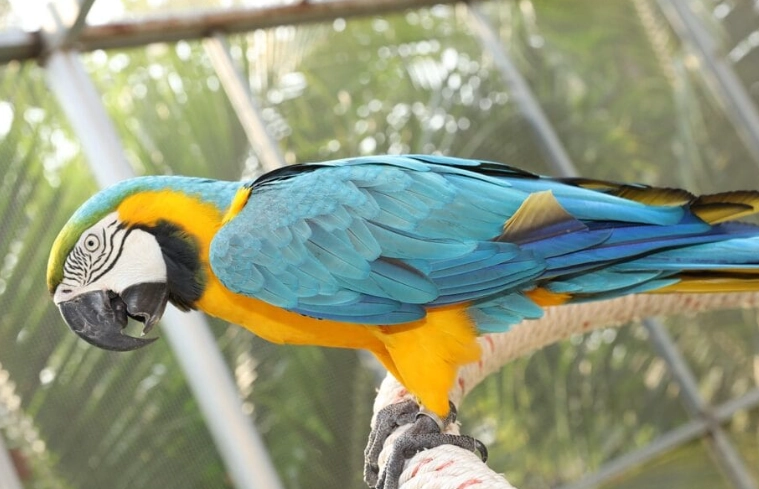
Your Action Plan: How to Maximize Your Parrot's Lifespan
Okay, so this is all a bit overwhelming. Where do you start? Here's a practical, step-by-step mindset.
First, assess your current situation honestly. Look at your bird's diet, cage, toy rotation, and daily routine. What's one thing you can improve this week? Maybe it's adding one new vegetable to its chop. Maybe it's buying a new foraging toy.
Find an Avian Vet. Seriously, do this now. Search the AAV's Find a Vet tool. Schedule a well-bird checkup. It establishes a baseline and a relationship.
Bird-Proof a Room. Designate a safe space—cover mirrors and windows, remove toxic plants, secure cords, block tight spaces. Let your parrot be a parrot there for several hours a day.
Learn About Foraging. This is the cornerstone of mental health. Start simple: put treats in a crumpled paper ball. Hide food in a cardboard box. Gradually make puzzles more complex. It taps into their natural instincts and burns mental energy.
It's not about being perfect overnight. It's about consistent, incremental improvement. Your parrot's age expectancy isn't a fixed number in a book; it's a living project you work on together every day.
Answering Your Top Parrot Lifespan Questions
I get asked these all the time. Let's tackle them head-on.
The goal isn't to chase some mythical 100-year parrot life expectancy. It's to ensure every year your bird has is full of health, engagement, and quality. A vibrant 30-year life is a greater success than a miserable 50-year one.
It comes down to this: understanding parrot age expectancy shifts your perspective from being a casual owner to a dedicated steward. You're managing a long-term, living legacy. It's challenging, expensive, and sometimes frustrating. But for those of us hooked, the reward—a deep, decades-long bond with a truly intelligent creature—is unlike anything else. Start with the diet, find the vet, and enrich the environment. Your parrot will thank you with every healthy, squawking, mischievous day.