Types of Black Cats: Breeds, Myths & Care Guide
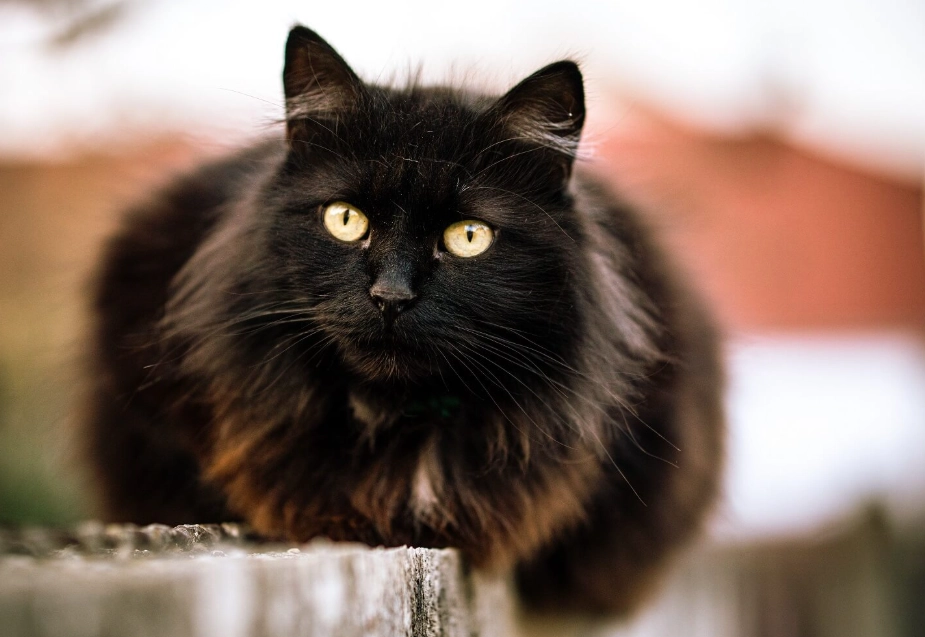
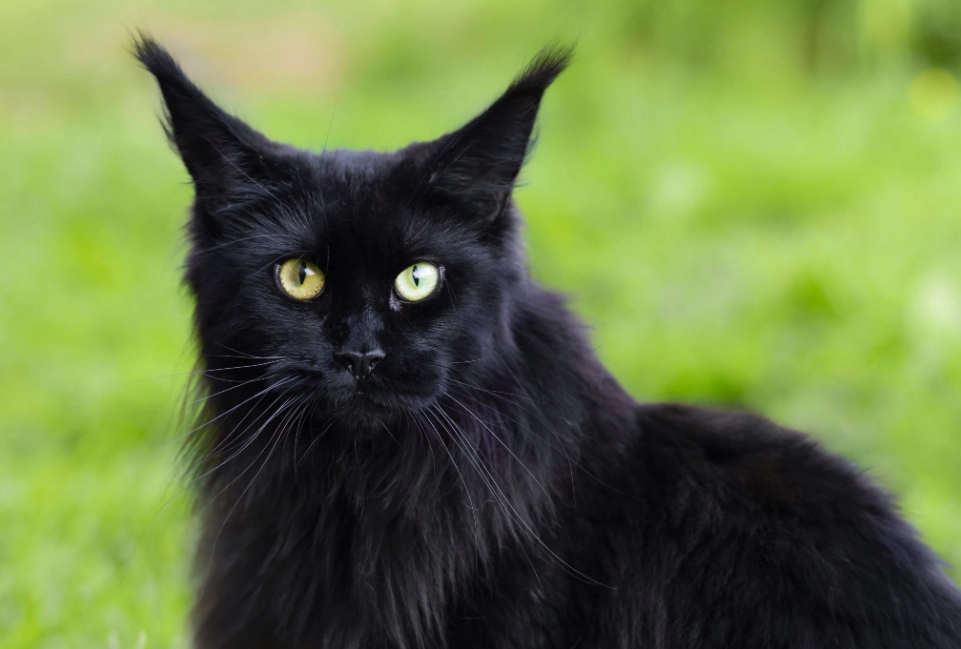
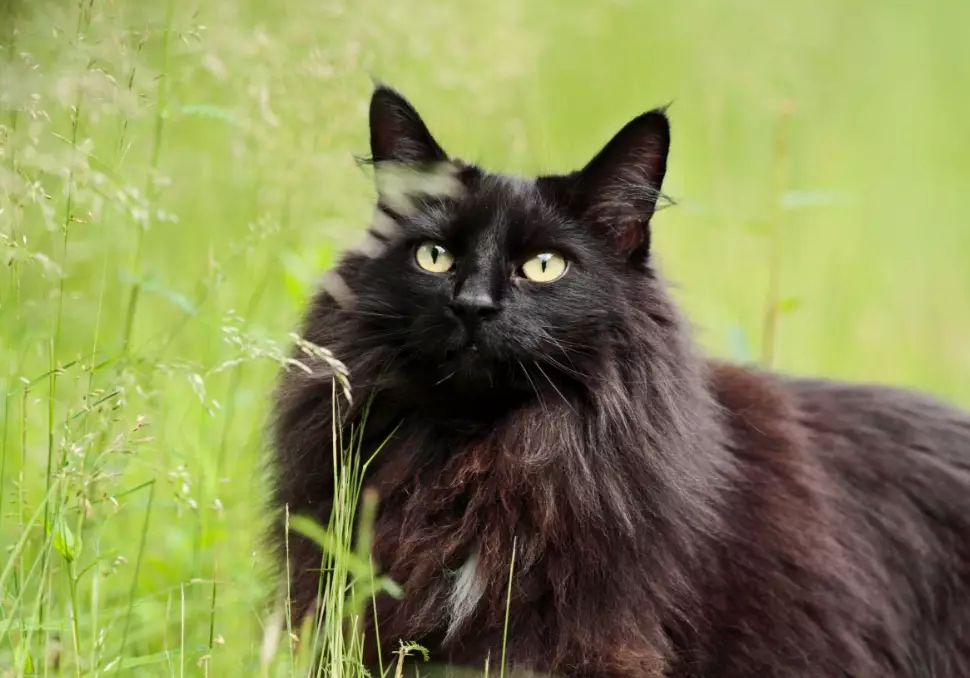
That sleek, shadowy figure winding around your legs or basking in a sunbeam isn't just a generic "black cat." I've lived with cats for over twenty years, and the assumption that all black cats are the same is one of the most persistent myths out there. The truth is, "black cat" is a coat color, not a breed. Beneath that glossy ebony fur lies a world of different body types, personalities, and histories. From purpose-bred panther lookalikes to moggies with a hidden genetic lottery ticket, understanding the types of black cats helps you appreciate their unique needs and charms. Some cat breeds are renowned for their stunning, consistent black coats. These are the felines where the breed standard often prizes that deep, even black from nose to tail tip. Here's a thing most lists won't tell you: even within these breeds, that perfect black isn't always guaranteed. Sunbathing can cause a black coat to "rust," giving it a reddish-brown tinge. It's not a health issue, just melanin breaking down in the sun. Some cats also have hidden tabby patterns (called "ghost striping") you can see in bright light. It's a cute quirk, not a flaw. Many of the most beloved cat breeds can produce black-coated individuals. The color is just one option in their genetic palette. A black Maine Coon is a magnificent sight—a giant, fluffy shadow. Their semi-longhair coat in black is stunning, often with a shaggy ruff and tufted ears. Personality-wise, they're gentle giants. I knew one named Odin who was solid black and the size of a small dog, yet he was afraid of squeaky toys. Their thick black fur requires serious commitment: regular brushing to prevent mats, especially under the arms and around the ruff. A black Persian is the epitome of feline luxury. That long, flowing coat in jet black requires daily grooming to prevent painful tangles and mats. It's a high-maintenance relationship. Their personalities are typically calm and sweet-tempered, preferring a serene lap to chaotic play. Be prepared for tear staining, which can be more noticeable on the dark fur around their eyes; daily gentle wiping is part of the routine. Think of the Cheshire Cat, but in dense, plush black. They have a rounded, cobby body and a famously dense coat that feels like a thick carpet. They are typically easygoing, undemanding, and a bit reserved. They're not lap cats in the constant sense, but they like to be in your vicinity. Their coat is deceptively easy—weekly brushing is fine, but when they shed, it comes out in thick clumps. This is the most common type of black cat—the wonderful mixed-breed moggie. Their genetics are a tapestry, and their personalities are wildly unpredictable in the best way. I've had a black domestic shorthair who was a fearless hunter and another who was a timid cuddlebug. Their care needs vary completely based on their coat length and individual health. Adopting one is often supporting a cat disproportionately affected by low adoption rates, something shelters call "Black Cat Syndrome." A Personal Note: My first cat as an adult was a black domestic shorthair named Salém. He wasn't any specific breed, but he had the most expressive green eyes and a purr that could rattle windows. He lived to 19, and he completely shaped my understanding that a cat's value has zero to do with its pedigree or coat color. You can't talk about black cats without addressing the elephant in the room: superstition. In many Western cultures, they're falsely seen as omens of bad luck. This nonsense directly impacts their lives, making them less likely to be adopted and sometimes targets of cruelty, especially around Halloween. But flip the script globally. In Japanese culture, a black cat is considered good luck, especially for single women, as it's believed to attract suitors. In Scottish folklore, a strange black cat arriving at your home signifies prosperity. British sailors once believed a black ship's cat would ensure a safe voyage. The ancient Egyptians revered all cats, and black ones were associated with the goddess Bastet. The modern "bad luck" myth largely stems from medieval Europe, where they became unfairly linked to witchcraft. It's a tired, harmful story that responsible cat lovers are working to rewrite by celebrating black cats for what they are: beautiful, individual pets. Caring for a black cat isn't mystically different, but their dark coat presents a few unique practicalities. That gorgeous black fur shows everything. Dandruff (those tiny white flakes) is more visible. A diet rich in omega-3 and omega-6 fatty acids can promote skin health and a glossy coat. Regular brushing distributes natural oils and catches shed fur before it lands on your dark furniture—a win-win. For longhaired black cats, consistent grooming is non-negotiable to prevent mats, which are painful and can hide skin issues. Black cats have no specific universal health defects linked to their color. Their health risks are tied to their breed. However, some studies, like one referenced by the National Institutes of Health (NIH), have suggested a possible link between melanism and certain disease resistances, though this is complex and not a reason to choose one cat over another. The main thing is to find a good vet and keep up with check-ups, as with any pet. This is a big one. A black cat is incredibly hard to see at night. If they are indoor-outdoor (though keeping them indoors is safest), a reflective or light-up breakaway collar is crucial. Indoors, be extra mindful when closing drawers, reclining chairs, or walking in dark hallways. I've nearly tripped over my own black cat more times than I can count because he blends into every shadow. Struggle to get a good photo? You're not alone. The key is soft, indirect light. Avoid harsh flash, which just creates demonic red-eye and shiny highlights. Photograph them near a window on a cloudy day or in a evenly lit room. Get down on their level and focus on their eyes—those brilliant golds, greens, or coppers will pop against the black fur.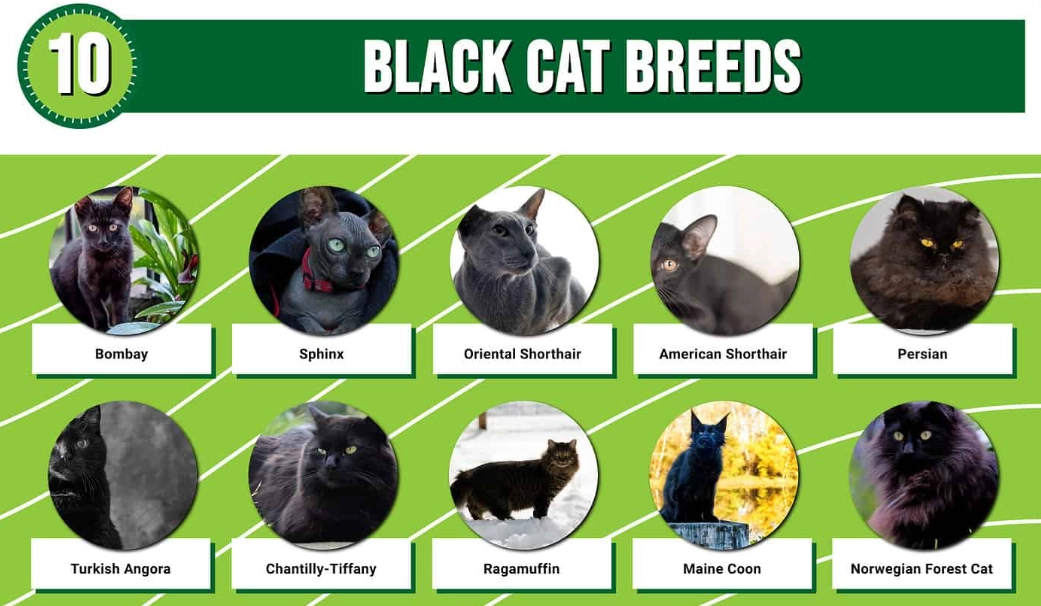
What's Inside?
The True Solid Black Cat Breeds
Breed
Key Characteristics
Personality Vibe
Grooming & Care Note
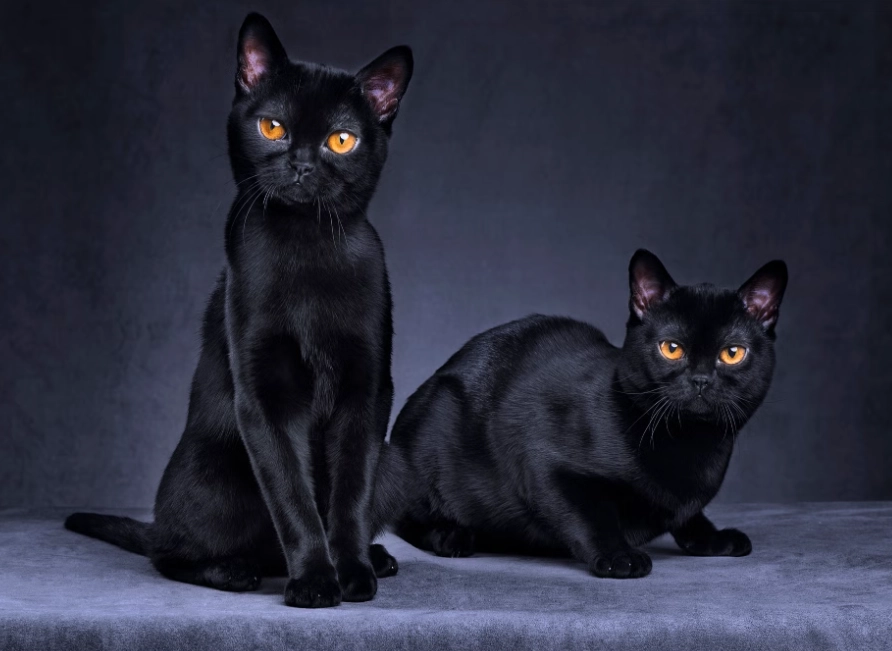
Bombay
The "patent leather" cat. Copper or gold eyes, muscular, short jet-black coat. Designed to resemble a miniature panther.
Outgoing, people-oriented, often dog-like in following you around. They crave attention.
Weekly brushing is plenty. Their social need is higher than their grooming need—don't leave them alone for long periods.
American Shorthair (Black Variety)
The classic working cat build: robust, strong, with a dense coat. Not all are black, but the black ones are solid.
Easygoing, adaptable, affectionate but not clingy. The reliable friend of the cat world.
Low-maintenance. Their dense coat sheds seasonally, so a bit more brushing in spring/fall helps.
Cornish Rex
Wavy, soft, "marcel wave" coat that feels like crushed velvet. Can come in black, which looks incredibly sleek.
Energetic, acrobatic, playful well into adulthood. Highly intelligent and curious.
Minimal shedding due to lack of guard hairs. They can get cold easily, so provide warm spots.
Oriental Shorthair
Siamese body and personality in a variety of colors, including solid ebony. Large ears, almond-shaped eyes.
Extremely vocal, intelligent, demanding. They form intense bonds and will tell you all about their day.
Easy grooming. The main care is mental stimulation—they need puzzles and interaction to avoid boredom.
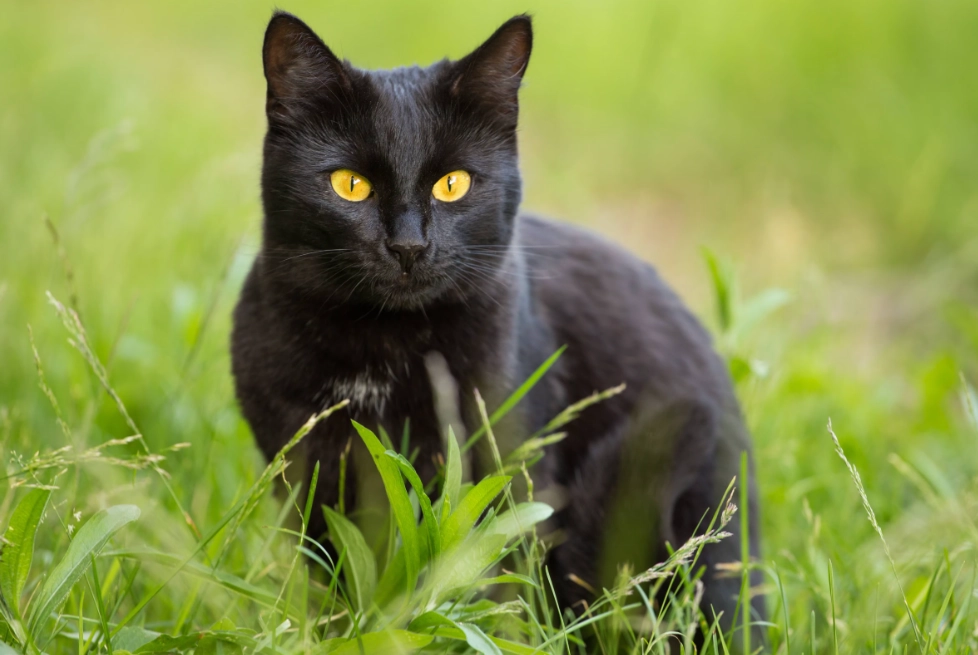
Popular Breeds That Can Wear Black
Maine Coon
Persian
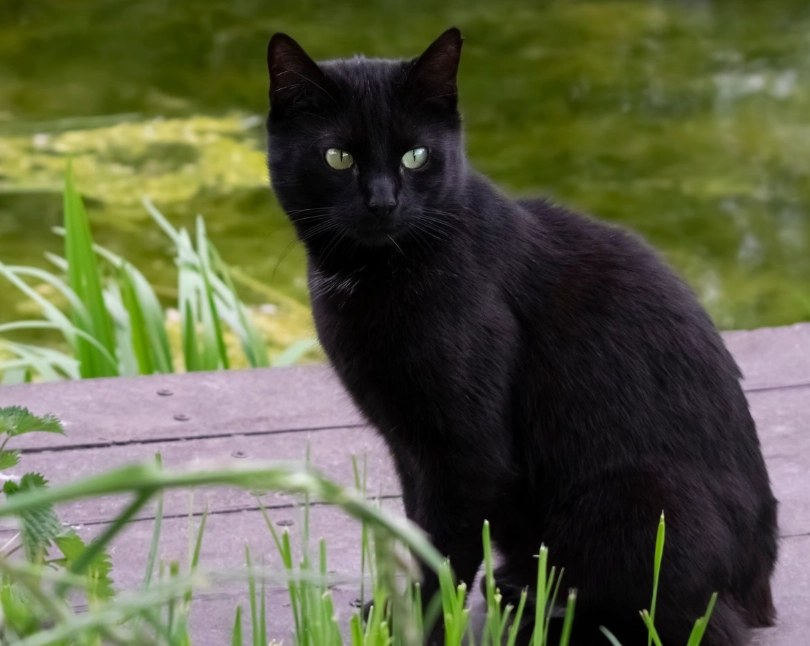
British Shorthair
Domestic Shorthair/Longhair
Black Cat Myths & A Bit of History
Caring for Your Black Cat: A Practical Guide
Grooming & Coat Health
Health Considerations
Safety & Visibility
Photography Tips
Your Black Cat Questions Answered
 At the end of the day, the type of black cat that's right for you depends on your lifestyle. Want a low-key buddy? A black American or British Shorthair might fit. Crave constant interaction? A Bombay or Oriental could be your match. Ready to save a life and get a unique friend? Your local shelter's black domestic shorthair is waiting. Look past the superstitions and the color—you're choosing a personality, a companion, a little life to share your home.