Do Dogs Have Belly Buttons? The Surprising Answer & What to Look For
You're giving your dog a good belly rub, your fingers running through the soft fur, when you feel it. A small, vertical line, or maybe a tiny dimple, right in the middle of their underside. It stops you for a second. Wait, is that... a belly button? The short, definitive answer is yes, absolutely. Every single dog has a belly button, or more accurately, an umbilical scar. It's not a myth or an old wives' tale. But if you're expecting a human-like "innie" or "outie," you'll be looking forever. A dog's navel is a subtle mark, a quiet reminder of their first and most vital connection to life.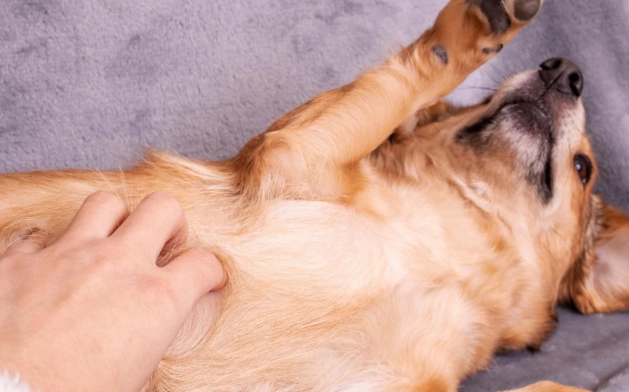
This tiny scar is one of those fascinating pieces of canine anatomy that most owners glance over, but it opens a door to understanding everything from basic mammalian biology to potential puppy health issues. Let's get straight to the point and then explore the details you actually need to know.
What's Inside This Guide
The Simple Biology Behind Your Dog's Belly Button
Let's rewind to before your dog was born. Inside the mother, each puppy develops inside its own amniotic sac, connected to a placenta via the umbilical cord. This cord is the puppy's lifeline. It delivers oxygen and nutrients from the mother's bloodstream and carries waste products away. Think of it as the ultimate all-in-one supply cable.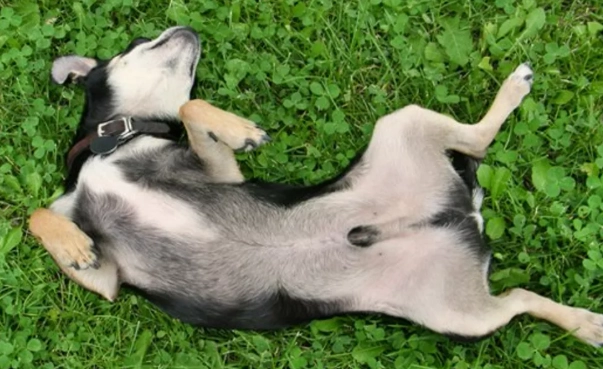
When the puppy is born, that cord is no longer needed. The mother dog typically severs the cord herself by chewing through it. This isn't a clean, surgical cut. It's a natural process. The remaining stub attached to the puppy dries up and falls off within the first few days to a week of life, much like the umbilical stump on a human baby. What's left behind is a small scar where the cord was attached—the canine belly button, or umbilicus.
Key Point: The belly button isn't an organ or a special body part. It's a scar. That's why it's often just a faint line or a small, hairless patch. It's healed tissue, a closed-up entry point where a major blood vessel once passed through the abdominal wall.
How to Find Your Dog's Belly Button (A Step-by-Step Look)
Okay, theory is great, but you want to see it for yourself. Here’s how to conduct your own at-home canine anatomy lesson. This works best on short-haired or hairless breeds, but with patience, you can find it on most dogs.
- Get them relaxed. Wait for a calm moment when your dog is lying on their back or side, maybe during a cuddle session. Don't force them if they're not comfortable.
- Location, location, location. Focus on the midline of the belly. Start right where the rib cage ends and run your fingers down the center towards the pelvis. You're looking for a spot roughly midway between the last rib and the start of the hind legs.
- Use your fingers, not just your eyes. Fur is the great concealer. Gently part the fur and feel the skin. You're searching for a subtle texture change. It often feels like a small, vertical ridge or a slight depression. It might be about the size of a pea or a small bean. On many dogs, it's just a thin line, less than an inch long.
- What you might see. Sometimes, the hair grows differently over the scar—it might be sparser, grow in a swirl, or be a slightly different color. On pink-skinned bellies, you might see a faint pink or white line.
On my own Boxer, it's a very clear, hairless vertical slit. On my friend's fluffy Golden Retriever, it's virtually impossible to find without shaving a patch, which I do not recommend! The visibility varies wildly.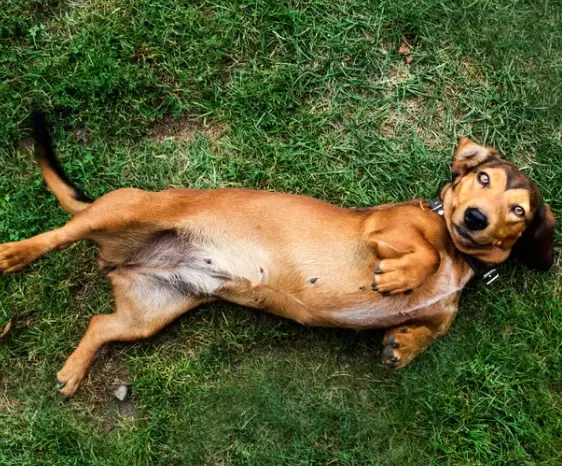
Why It Doesn't Look Like Ours: Key Differences
This is where people get tripped up. We expect a belly button to look like our own. But canine and human healing processes post-birth are different.
| Feature | Human Belly Button | Dog Belly Button |
|---|---|---|
| Primary Form | An "innie" or "outie" depression/protrusion. | A flat scar, line, or tiny dimple. |
| Healing Process | The cord stump falls off, and the area often heals inward, forming a navel. | The cord stump dries and falls off, and the skin heals flat against the abdominal wall. |
| Visibility | Almost always visible and obvious. | Often hidden by fur; requires feeling to locate. |
| Function | Purely a scar; no function. | Purely a scar; no function. |
The biggest misconception? That a dog's flat scar means something went wrong. It didn't. Flat healing is the norm for most quadruped mammals. An "innie" in a dog is actually more likely to be a sign of a problem, which we'll get to next.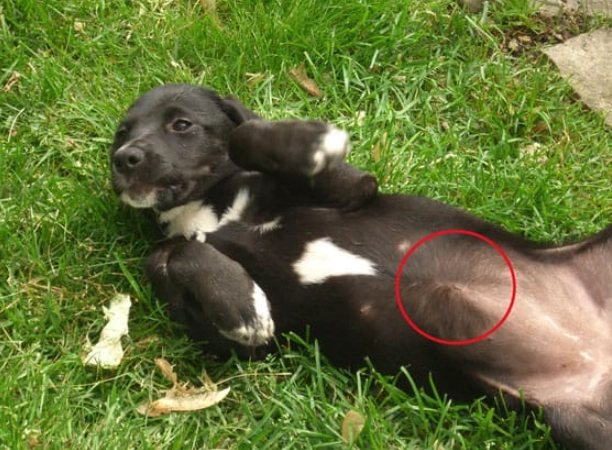
When the Belly Button Area Is a Health Concern
Most of the time, that little scar is nothing but a curiosity. But because it's a point where the abdominal wall had an opening, it can be a site for a specific congenital issue. This is the practical knowledge every dog owner should have.
Umbilical Hernias: The Main Thing to Watch For
An umbilical hernia is a small hole in the abdominal wall where the umbilical cord passed through. In simple terms, the hole didn't close completely after birth. This allows a small amount of abdominal fat (or in rare, serious cases, a loop of intestine) to poke through, creating a soft, squishy lump under the skin at the umbilicus.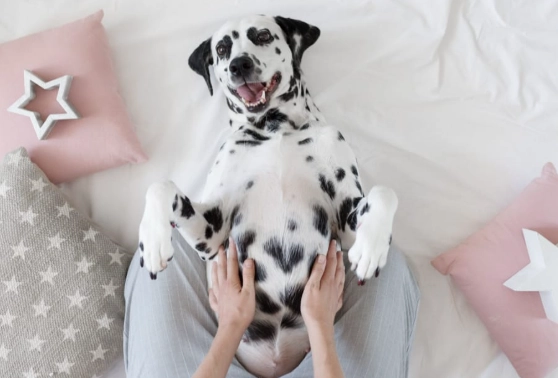
Here’s what you need to know:
- They're common. Small umbilical hernias are surprisingly common in puppies, especially in certain breeds like Airedales, Basenjis, and Weimaraners, though any breed can have one.
- Size matters. A hernia the size of a pea or even a small grape in a puppy is often not an emergency. Many small hernias will close on their own by the time the puppy is 6 months old.
- When it's a problem. If the hernia is large (bigger than the tip of your finger), seems to be growing, or feels hard and painful, it needs veterinary attention immediately. A large hernia risks a section of intestine becoming trapped (incarcerated), which is a surgical emergency.
- The fix. If a hernia doesn't close on its own and needs repair, it's a straightforward surgical procedure. It's often done at the same time as the puppy's spay or neuter surgery. The vet will push the contents back into the abdomen and suture the muscle closed.
A vet I worked with always said, "A hernia is a 'planned surgery,' but a strangulated intestine from an ignored hernia is an 'emergency surgery.'" The difference in cost, risk, and recovery is massive. Check your puppy's belly during your regular cuddles.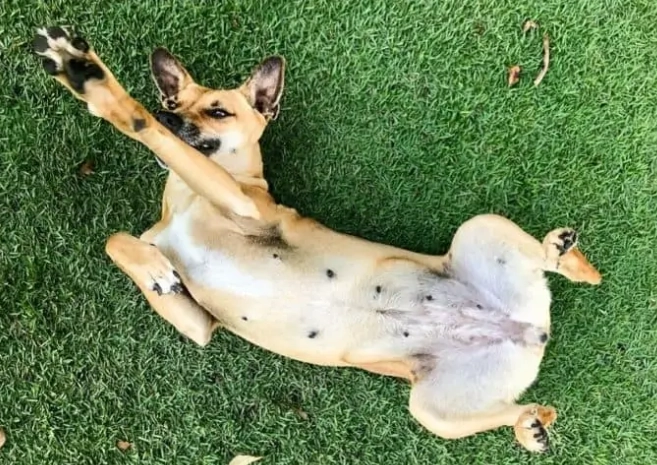
Other (Rarer) Issues
While hernias are the main event, keep an eye out for redness, swelling, discharge, or excessive itching at the site. These could indicate a skin infection or, in adult dogs, a rare type of tumor. Any sudden, painful swelling warrants a vet visit.
Your Top Questions, Answered
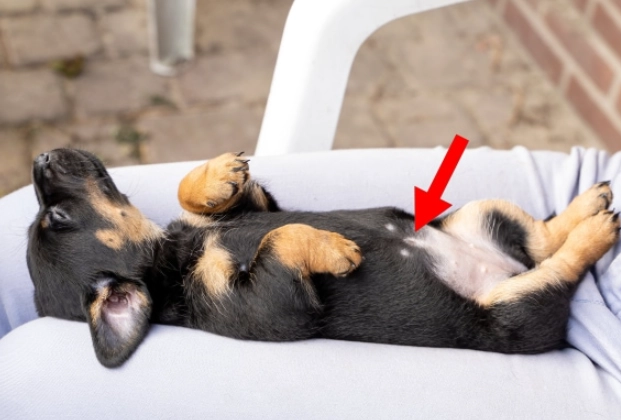


So, the next time you're enjoying some quality belly rub time, take a moment to appreciate that little line or dimple. It's the first scar your dog ever got, the mark of their independence, and a perfect reminder of the incredible biological journey every puppy takes. It's not just a belly button—it's the story of how your dog's life began.
Related Articles