Is Asparagus Good for Dogs? Safety, Benefits & Feeding Guide
You're standing in the kitchen, prepping dinner. That bundle of asparagus is on the counter, and those big, hopeful eyes are locked onto you. The question pops into your head, clear as day: is asparagus good for dogs? Can you toss a piece to your furry sous-chef, or is that a one-way ticket to an emergency vet visit? I've been there. My own dog, a curious Labrador mix named Barney, once snagged a raw asparagus spear right off the cutting board. Panic ensued. A frantic Google search later, I was knee-deep in conflicting forum posts and vague advice. It took digging through actual veterinary resources to feel settled. So let's save you that panic and confusion. The short, and somewhat surprising answer? Yes, asparagus is good for dogs in a very specific, prepared way. But it's not as simple as a yes or no. It's more of a "yes, but..." situation. This isn't like carrots or green beans, where you can be pretty casual. Asparagus comes with a few important asterisks that you absolutely need to know about. Think of this as your complete, no-nonsense guide. We're going to move past the simple "can they eat it" and into the real meat (or, well, vegetable) of the matter. We'll talk about why you might want to share it, the very real reasons for caution, and exactly how to do it safely. Because when it comes to our dogs, guessing isn't good enough. Let's cut to the chase. According to authoritative sources like the ASPCA (American Society for the Prevention of Cruelty to Animals), asparagus fern—the feathery, leafy part of the ornamental plant—is listed as toxic to dogs and cats, causing gastrointestinal upset. This causes a lot of the confusion online. But here's the critical distinction. The vegetable we eat, the Asparagus officinalis spear, is a different story. The edible stalk itself is not classified as toxic. Organizations like the American Kennel Club (AKC) list it as a generally safe vegetable for dogs when prepared properly. So, the vegetable spear? Generally safe. The decorative fern plant? Avoid completely. Key Takeaway: The edible asparagus spear you buy at the grocery store is non-toxic to dogs. However, "non-toxic" doesn't automatically mean "ideal" or "risk-free." The preparation and portion size turn a potentially risky food into a safe treat. If it requires work, why bother? Well, when prepared correctly, asparagus can offer some decent nutritional perks as an occasional add-in to your dog's balanced diet. It's not a necessity, but it can be a healthy extra. Let's break down what's inside those green spears. First off, it's low in calories and fat, which is great for weight management. It's also packed with fiber, which can aid in digestion and help keep things moving regularly. Then you've got a cocktail of vitamins. It also contains trace amounts of iron and zinc. So, in theory, asparagus can be good for dogs as a source of these micronutrients. I say "in theory" because your dog's primary nutrition should always come from a complete and balanced commercial diet or a carefully formulated homemade diet under veterinary guidance. Think of asparagus as the sprinkle of parsley on top of the main course, not the main course itself. My Experience: I occasionally add a few cooked, pureed asparagus tips to Barney's kibble. I don't do it for a massive health overhaul—I do it because it's a way to add a different fiber and vitamin source to his diet, and he seems to enjoy the variety. The key word is occasionally. This is the part most blog posts glaze over, and it's the most important. Understanding the risks is what makes you a responsible pet owner. Just because something isn't "toxic" doesn't mean it can't cause problems. This is the biggest, scariest risk. Raw asparagus is tough, fibrous, and stringy. A dog, especially an eager one that gulps food, can easily swallow a large piece whole. That tough spear can become a serious choking hazard or, if swallowed, can cause an intestinal blockage. Blockages are life-threatening and require emergency surgery. Even cooked, if it's not cut into small, manageable pieces, it can pose a similar risk. This is the number one reason preparation is non-negotiable. Dogs have shorter digestive tracts than humans, designed for meat. Introducing a new, fibrous vegetable—especially in large quantities—can overwhelm their system. The result? Gas, bloating, stomach cramps, diarrhea, or vomiting. It's not fun for anyone, especially your dog. As mentioned, the inedible fern part of the asparagus plant contains sapogenins, which are mildly toxic. If you grow asparagus in your garden, your dog could have access to the whole plant. Ingestion of the fern can lead to vomiting, diarrhea, and abdominal pain. This is why knowing the difference between the vegetable and the plant is crucial. Just like in humans, eating asparagus can cause a distinct odor in your dog's urine. It's due to the breakdown of asparagusic acid. It's harmless, but it can be strong. Don't be alarmed if you notice it after they've eaten some. Warning: Never, ever feed your dog asparagus that has been prepared for humans. This means no butter, oil, salt, garlic, onions, or sauces. Garlic and onions are highly toxic to dogs, and excess fat and salt are terrible for their health. The asparagus must be plain. If you've weighed the benefits and risks and want to proceed, doing it right is everything. Here’s my tried-and-true method to make asparagus safe for canine consumption. Following these steps is how you ensure that asparagus is good for your dog and not a hidden hazard. Portion control is everything. Asparagus should only ever be a treat or a dietary supplement, not a staple. The 10% rule is a good guideline: treats and extras (including vegetables like asparagus) should make up no more than 10% of your dog's total daily caloric intake. The other 90% should be their complete and balanced dog food. Here's a rough visual guide based on dog size: These are maximums. Starting with half this amount is smarter. And remember, if your dog has any pre-existing health conditions—especially kidney issues, as asparagus contains purines—you must consult your vet first. Let's tackle those specific, sometimes quirky questions that keep popping up. These are the things you're actually typing into Google. So, after all this, where do we land on the question, "is asparagus good for dogs"? It's a conditional yes. It's not a superfood for dogs, and it's certainly not a necessity. There are safer, easier vegetable options out there, like plain cooked green beans, carrots, or pumpkin. But if your dog enjoys it and you are willing to put in the precise preparation work—cooking until soft, chopping finely, serving plain and in strict moderation—then it can be a safe, occasional green treat that provides some extra fiber and vitamins. The bottom line? Your dog's health isn't a guessing game. When in doubt, the safest path is always to skip the human food and stick with treats formulated for dogs. If you want to explore vegetables, start with the simpler, lower-risk options first. And no matter what, your veterinarian's advice trumps any article you read online, including this one. They know your dog's unique health history. For Barney, asparagus is a very rare, finely-chopped, steamed surprise in his bowl. It's not a regular feature. And that's probably the best approach for most dogs: a curious, cautious, and infrequent "maybe."In This Guide
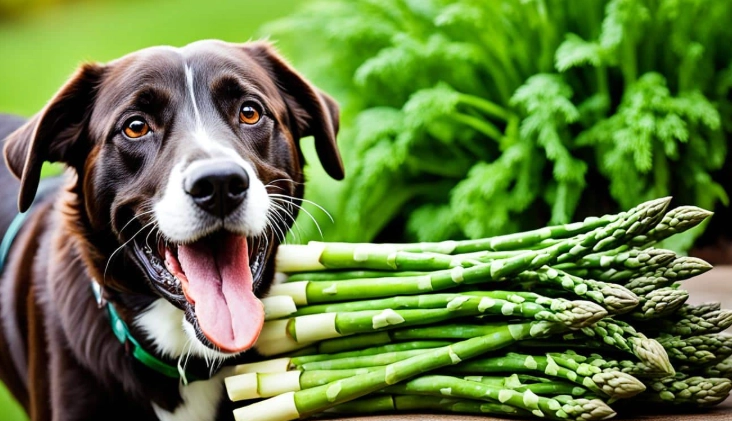
The Straight Answer: Is Asparagus Safe for Dogs?

Why Even Consider It? The Potential Benefits of Asparagus for Dogs

The Not-So-Green Side: Risks and Reasons for Caution
The Choking and Intestinal Blockage Hazard
The Digestive Upset Factor
The Asparagus Fern Confusion & Potential Toxicity
The Unpleasant (But Mostly Harmless) Side Effect

How to Safely Prepare Asparagus for Your Dog: A Step-by-Step Guide
Do NOT roast, sauté, or grill it for your dog, as these methods often use oil or seasonings.
Feeding Guidelines: How Much is Too Much?
Dog Size Example Breed Recommended Max Serving (Cooked & Chopped) Frequency Small (Under 20 lbs) Chihuahua, Pomeranian 1-2 teaspoon-sized pieces Once or twice a week at most Medium (20-50 lbs) Cocker Spaniel, Border Collie 1-2 tablespoon-sized pieces Once or twice a week at most Large (50+ lbs) Labrador, German Shepherd 2-3 tablespoon-sized pieces Once or twice a week at most 
Common Questions Dog Owners Ask (The FAQ Section)
Final Verdict: Should You Feed Your Dog Asparagus?