Ardennais Horse: The Complete Guide to This Gentle Giant
You see them in historical paintings, pulling cannons. You might spot them at a modern draft horse show, feathers flowing. The Ardennais horse carries an aura of unshakeable calm and raw, earthy power. But what's it actually like to live with one of these gentle giants from the French-Belgian border? Is the romantic image the whole story? After years around heavy horses, I can tell you the Ardennais is a special breed, but it comes with a set of realities many glossy brochures skip over.
Let's get straight to it. If you're looking for a draft horse that combines a tractable mind with surprising agility for its size, the Ardennais deserves your attention. But you need to understand what you're signing up for.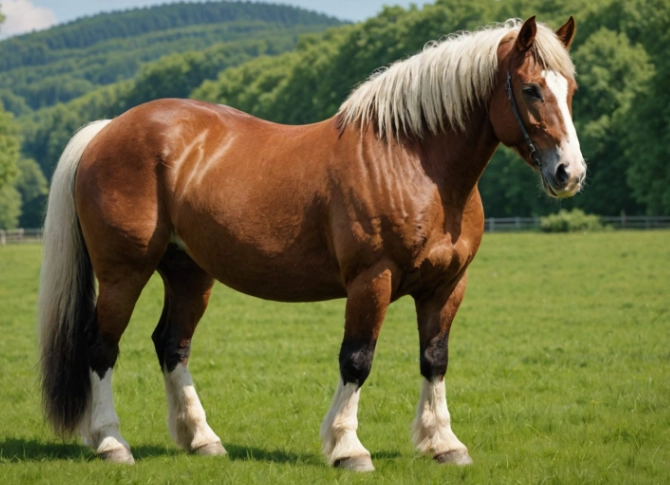
What You'll Find Inside
From Roman Warhorse to Farm Powerhouse
The Ardennais is old. We're talking Julius Caesar old. His writings mention the tough, stocky horses of the Ardennes region used by his cavalry. That's a serious pedigree. Over centuries, they evolved through various infusions of blood—some Arabian lightening things up in the early 1800s, later heavier Belgian Draft influence to bulk them up for farm and artillery work in the 19th century.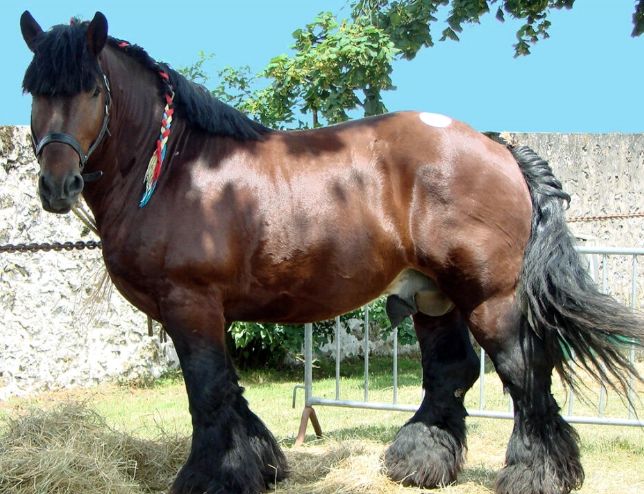
This history shaped their duality: enough stamina and hardiness for prolonged campaigns, yet a calmness essential for not spooking in chaos. After the wars, they returned to the fields, becoming the quintessential farm horse across Northern France and Belgium. While tractors replaced them, a dedicated community preserved the breed, shifting their role to forestry, tourism, and showing.
A Quick Breed Snapshot
Origin: Ardennes region (France/Belgium)
Primary Use Today: Draft work, logging, driving, leisure riding, shows.
Conservation Status: Considered a heritage breed, numbers are stable but monitored by organizations like Les Haras Nationaux in France.
My Take: Their survival is a testament to their utility. They weren't saved just for being pretty; they remained useful.
Spotting an Ardennais: Key Characteristics
People often confuse heavy breeds. Here’s how to pick out an Ardennais from, say, a Belgian or a Percheron.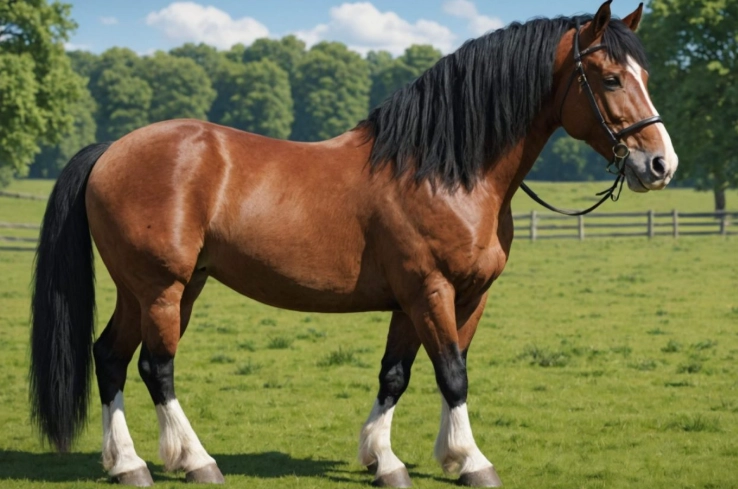
First, they're compact. Not the tallest draft, but incredibly dense. They give the impression of a solid block of muscle. The head is broad with a straight or slightly convex profile, and those expressive eyes radiate kindness. The neck is short and powerfully muscled, flowing into low, broad withers and a back that seems built to carry weight.
Then there's the feather. Not the overly long, silky feather of a Shire, but a more moderate, coarse tufting around the fetlocks. It's functional, protecting against the damp, chilly climate of their homeland.
| Trait | Description | Why It Matters |
|---|---|---|
| Height | 15.2 to 16.1 hands (62-65 inches) on average. | Easier to handle than some 18-hand giants, but still massive. |
| Weight | 1,500 to 2,200 lbs (700-1,000 kg). | Pure pulling power. Every piece of equipment must be heavy-duty. |
| Colors | Bay, roan, chestnut, palomino, gray. Black is rare. | Less uniform than some breeds, offering beautiful variety. |
| Lifespan | 25-30 years with good care. | A long-term commitment, much longer than many light horse breeds. |
| Build | Extremely muscular, short-legged, deep girth. | Low center of gravity = incredible stability and pulling leverage. |
The most common mistake I see? People call any stocky, light-colored draft horse an "Ardennais." Look for that specific combination of compactness, moderate feather, and that distinctive head shape.
The Ardennais Temperament: A Working Companion
This is where the Ardennais truly shines. Their temperament is their greatest asset. They are typically calm, patient, and willing. There's a stoic intelligence there. They aren't flighty. A plastic bag blowing across the pasture might make a Thoroughbred spin and bolt; an Ardennais is more likely to watch it, maybe take a curious step, and then go back to grazing.
This makes them superb for beginners in the draft world, or for therapeutic settings. Their walk is a purposeful, ground-covering stride, and their trot is a comfortable, rolling motion. I've taken novice riders on Ardennais, and the feedback is always the same: "I feel so safe."
But don't mistake calm for stupid. They learn quickly, especially when the work makes sense to them. Harnessing one for a logging session, you can see them thinking, adjusting their pull, understanding the task. They want a job.
Modern Uses: Beyond the Field
You won't find many plowing fields commercially today. Their roles have adapted:
Low-Impact Logging: Their strength and sure-footedness make them perfect for extracting timber in sensitive forests where machinery would cause damage.
Recreational Driving: A top choice for pleasure driving. A pair of Ardennais in harness is a majestic sight, and their steady nature is ideal for busy show environments or quiet country roads.
Leisure & Therapy Riding: That broad back is a comfortable seat. More are being used for trail riding and in programs for riders with disabilities, where their predictable movement is gold.
Caring for a Half-Ton Horse: Practical Realities
Here's the unvarnished truth. Caring for an Ardennais is not just caring for a "big horse." It's a different scale.
Feeding: They are famously easy keepers. Their metabolism is geared for efficiency, a legacy of surviving on sparse winter feed. This means they can thrive on good-quality forage and need minimal grain. The biggest mistake owners make is overfeeding. An obese Ardennais is a heartbreak in motion, stressing every joint. You must manage pasture access and measure hay carefully.
Hoof & Feather Care: Their hooves are tough but need regular trimming. The feathering requires attention. You must dry and check the skin underneath regularly to prevent "scratches" or mud fever, a bacterial dermatitis. It's a daily ritual in wet weather.
Space & Infrastructure: A standard 12x12 stall feels cramped. They need wider aisles, stronger fences (no lightweight electric tape), and heavier-duty trailers and harness. Everything costs more.
Health Watch: Watch for signs of laminitis (linked to obesity) and be proactive about joint support as they age. Their size puts strain on their legs. A good farrier and vet familiar with drafts are non-negotiable.
Is an Ardennais Right For You? The Honest Checklist
Don't fall for the look alone. Ask yourself these questions:
Do you have the physical space? Not just a big stall, but ample, well-drained pasture and sturdy handling facilities.
Is your budget scaled up? Feed, farriery, vet care, bedding—it all consumes more volume. A dose of wormer or painkiller is literally double or triple that for a light horse.
Do you have a purpose for them? They are happiest with a job, even if it's light driving or regular riding. A bored draft horse can develop vices.
Do you have experienced support? Even with their gentle nature, you need someone who knows how to handle and train large drafts. This is not a learn-as-you-go situation.
If you answered yes, you might just be ready for one of the most rewarding equine partnerships out there.
Your Ardennais Questions, Answered
So, there you have it. The Ardennais is a breed of profound strength and even more profound gentleness. They are a living link to history, a testament to practical breeding, and for the right person, an incredibly loyal partner. Just go in with your eyes open to the scale of the commitment. If you can meet their needs, they will repay you with a quiet, steadfast presence unlike any other.
Related Articles