Scottish Terrier Guide: Care, Personality & Is This the Right Dog for You?
Quick Navigation
- A "Diehard" History: Where the Scottie Attitude Comes From
- Scottish Terrier 101: The Look, The Feel, The Standards
- The Scottish Terrier Personality: Charming, Stubborn, and Profoundly Loyal
- The Grooming Deep Dive: It's a Lifestyle, Not a Chore
- Scottish Terrier Health: What You Must Know Before You Buy
- Living with a Scottie: Daily Life, Training, and Exercise
- Is a Scottish Terrier Right for You? A Self-Assessment
- Common Scottish Terrier Questions (Answered Honestly)
- Final Thoughts: The Scottie Verdict
You know the look. That iconic silhouette, the beard, the eyebrows full of attitude. The Scottish Terrier, or Scottie as everyone calls them, is one of the most recognizable dog breeds on the planet. But here's the thing most articles don't tell you upfront: owning one is nothing like owning a Golden Retriever. It's a whole different universe of dog ownership. They're not just cute, low-to-the-ground pets; they're a project, a personality, and a lifelong commitment wrapped in a wiry black (or wheaten) coat.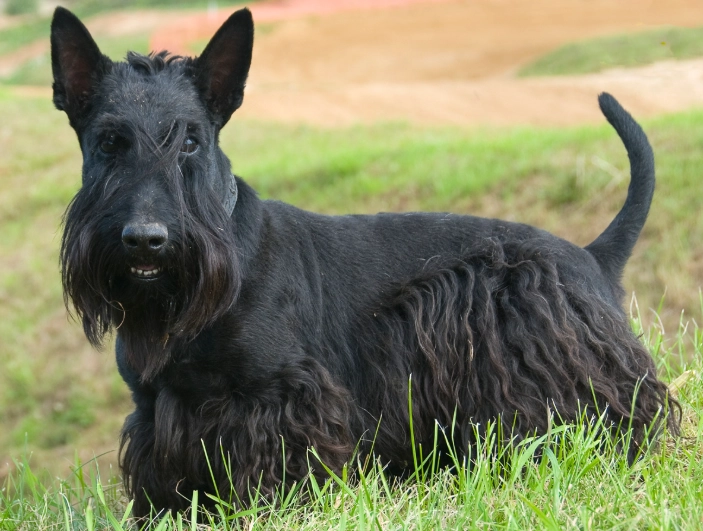
I've talked to dozens of Scottie owners, breeders, and veterinarians over the years. The consensus? People either completely adore them or find them utterly bewildering. There's rarely a middle ground. This guide isn't going to sugarcoat things. We're going deep on what it's really like to live with a Scottish Terrier—the glorious highs, the frustrating lows, the grooming bills, and the stubborn charm that makes it all worthwhile (for the right person).
If you're just looking at pictures and thinking "how cute," stick around. You might change your mind. Or you might fall even more in love.
A "Diehard" History: Where the Scottie Attitude Comes From
To understand a Scottish Terrier, you have to go to the rugged, heather-covered hills of Scotland. This isn't a breed cooked up in a fancy kennel for looks. They were working dogs, through and through. Their job? To go to ground. That means they were bred to fearlessly dive into dens and burrows after foxes, badgers, and rodents. Think about the temperament needed for that. You need a dog that's brave to the point of recklessness, stubborn enough to not back down from a fight in a dark hole, and independent enough to make decisions far away from its human's guidance.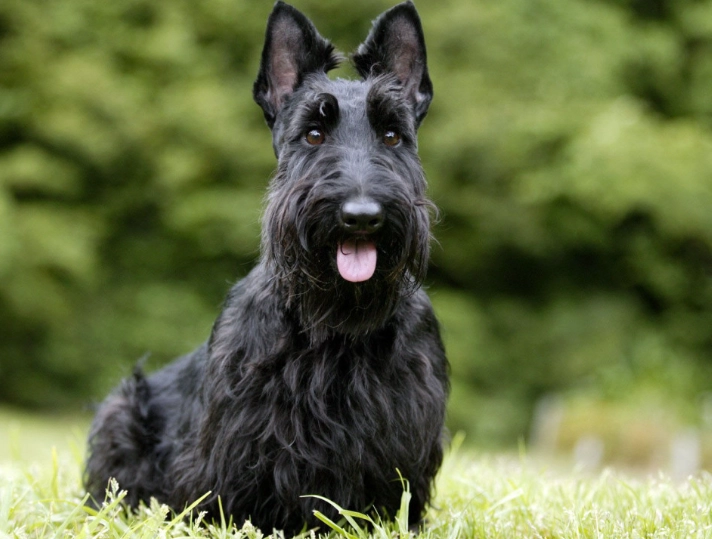
That's the DNA of your modern Scottie. The American Kennel Club (AKC) officially recognized the breed in 1885, but its history is much older and intertwined with other Scottish terriers. They were the favorite of presidents (FDR's Fala is the most famous), celebrities, and have been a symbol of tenacity and grit for over a century. The nickname "diehard" wasn't given lightly. It speaks to their legendary toughness.
Knowing this history explains so much. The aloofness? They were bred to work alone, not to please a crowd. The stubbornness? It's not disobedience; it's them assessing the situation and deciding if your command makes sense to their mission. The high prey drive? That's the core of their being. You can't train centuries of instinct out of them.
Scottish Terrier 101: The Look, The Feel, The Standards
Let's break down what makes a Scottie a Scottie, according to the breed standard set by organizations like the AKC and The Scottish Terrier Club of America (STCA). This isn't just trivia—it affects their health, care, and function.
The Signature Appearance
A Scottish Terrier is a small, compact, short-legged dog, but they should feel substantial and powerful, not delicate. It's like holding a brick wrapped in steel wool. Their head is long for their body size, with those distinctive eyebrows and beard. The ears are small, pointed, and carried erect. The tail is short, thick, and carried proudly upright.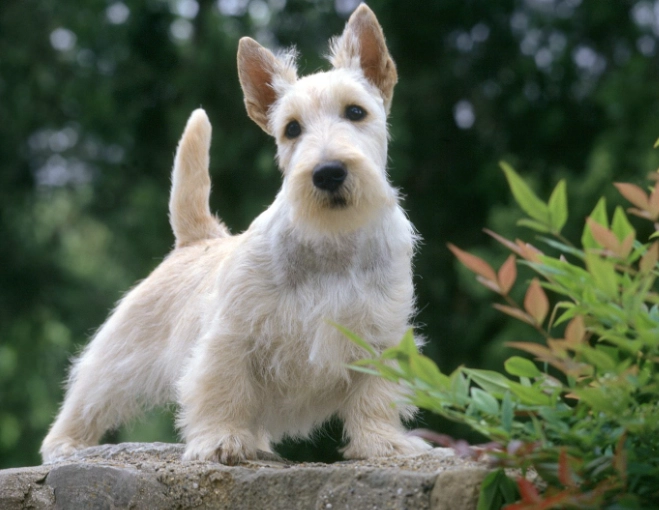
The coat is a double coat: a hard, wiry, and weather-resistant outer coat over a soft, dense undercoat. This coat was essential for protection in the Scottish climate and terrain. Acceptable colors are black, wheaten (a pale yellow to a rich wheat shade), and brindle (a mix of dark and light hairs, usually black and tan). You'll see black most often.
Size and Weight
They're squarely in the small dog category, but they carry themselves like much larger animals.
| Gender | Average Height (at shoulder) | Average Weight |
|---|---|---|
| Male Scottish Terrier | About 10 inches (25 cm) | 19 to 22 pounds (8.6 to 10 kg) |
| Female Scottish Terrier | About 10 inches (25 cm) | 18 to 21 pounds (8.2 to 9.5 kg) |
They should never look spindly or overweight. A fit Scottie is a muscular, agile dog.
The Scottish Terrier Personality: Charming, Stubborn, and Profoundly Loyal
This is where people get it right or wrong. If you want a velcro dog that lives for your approval, look elsewhere. If you want a dignified, self-possessed companion with a wicked sense of humor, you might be in the right place.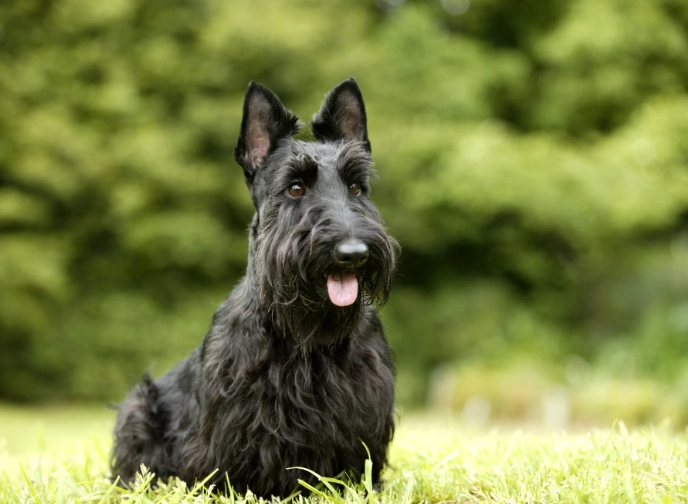
Let’s be honest, calling a Scottie "stubborn" is a bit of an understatement. It's more like they have an iron will. Training requires patience, consistency, and a good sense of humor. Positive reinforcement is the only way that works. They are highly intelligent, but their intelligence is often directed toward figuring out what they want, not what you want. Harsh methods will backfire spectacularly—they will simply shut down and refuse to engage.
With their family, they are deeply affectionate and loyal. They often bond very closely with one person. They can be wonderful, gentle companions for respectful children within their own family. However, their tolerance for clumsy handling is low. They are not a Lab who will put up with tail-pulling. Supervision is non-negotiable.
With strangers? Aloof is the kind word. They are often reserved, skeptical, and slow to warm up. They are not typically aggressive, but they are not going to run up to a guest for belly rubs. This makes them excellent watchdogs—they are alert and will bark to announce visitors—but terrible "greeter" dogs.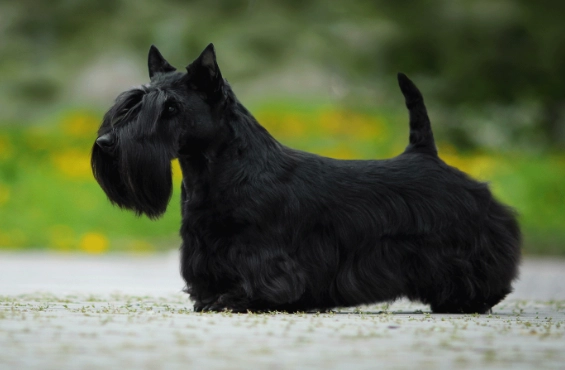
They can be dog-selective. Early and ongoing socialization is critical to help them get along with other dogs, but some may always prefer to be the only dog in the house. They have a "big dog" attitude and won't back down from a challenge, which can be problematic at dog parks.
The Grooming Deep Dive: It's a Lifestyle, Not a Chore
This is the single biggest surprise and ongoing cost for most new Scottie owners. That beautiful, wiry coat doesn't maintain itself. You have two main paths: clipping or hand-stripping.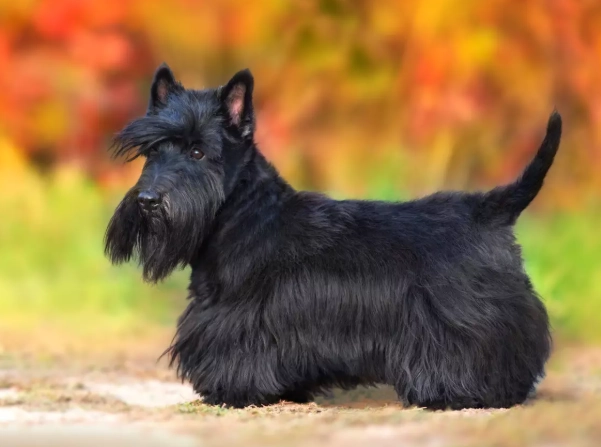
Clipping vs. Hand-Stripping: What's the Difference?
| Method | What It Is | Pros | Cons | Cost & Frequency |
|---|---|---|---|---|
| Clipping | Using electric clippers to cut the hair down to a uniform length. | Faster, cheaper, less stressful for the dog if done properly. | Softens the coat texture over time, can lead to color fading (black turning rusty), doesn't remove dead undercoat as effectively, can cause skin irritation. | $50-$80 every 6-8 weeks. |
| Hand-Stripping | Plucking the dead outer coat hairs out by hand or with a stripping knife, encouraging new growth. | Maintains the proper harsh, wiry texture and vibrant color. Promotes healthier skin and coat. The "correct" method for show dogs. | Time-consuming, expensive, requires a skilled groomer, many dogs dislike the process. | $80-$150+ every 8-12 weeks. Much harder to find a groomer who does it. |
Most pet owners opt for clipping for practicality. But even with clipping, you're looking at professional grooming every two months for life. You also need to commit to regular brushing at home (2-3 times a week) to prevent mats, especially in the skirt, beard, and behind the ears. Their beard gets messy after eating and drinking—get ready for a lot of face-wiping.
I've spoken to owners who budget over $1,000 a year just for professional grooming. It adds up.
Home Grooming Kit Essentials
Even between professional grooms, you'll need tools:
- A good slicker brush and a metal comb for detangling.
- Dog-safe shampoo and conditioner (their skin can be sensitive).
- Nail clippers or a grinder (their nails grow fast).
- Ear cleaning solution (those small, erect ears can trap moisture).
- Toothbrush and dog toothpaste.
Scottish Terrier Health: What You Must Know Before You Buy
This is the most important section. Scottish Terriers are, unfortunately, predisposed to several serious health conditions. A responsible breeder will test for these. You MUST ask for proof.
Scottish Terrier Health Issues:
- Scottie Cramp: A neurological disorder causing temporary, episodic muscle stiffness and a strange "goose-stepping" gait when the dog is excited or exercising. It's not painful and doesn't affect lifespan, but it can be alarming to see. It's managed, not cured.
- Craniomandibular Osteopathy (CMO or "Lion Jaw"): A painful bone disease of the jaw that typically appears in puppies 4-8 months old. It causes swelling, pain when eating, and fever. Some cases resolve on their own; severe cases require medication. Reputable breeders screen parent dogs to avoid this.
- Von Willebrand's Disease: A bleeding disorder similar to hemophilia. Dogs can bleed excessively from minor injuries or surgeries. A simple test exists.
This is serious stuff.
- Patellar Luxation: A slipping kneecap, common in many small breeds.
- Allergies: Skin allergies are not uncommon and can manifest as itching, licking paws, or ear infections.
To find a responsible breeder, look for those who:
- Are members of the STCA.
- Perform and can show you OFA (Orthopedic Foundation for Animals) certifications for patellas, PennHIP for hips, and eye exams from the Canine Eye Registration Foundation (CERF).
- Test for Von Willebrand's Disease and use genetic testing for other known markers.
- Talk openly about health problems in their lines and have a health guarantee in their contract.
- Raise puppies in their home, ask you as many questions as you ask them, and want the puppy back at any time if you can't keep it.
Consider adoption! Scottish Terrier rescues, like those affiliated with the STCA, often have wonderful dogs of all ages needing homes.
Living with a Scottie: Daily Life, Training, and Exercise
They are surprisingly adaptable to apartment or condo life, provided their exercise needs are met. They are not hyper, but they are energetic and need a good daily walk (20-30 minutes) plus some playtime. A bored Scottie is a destructive Scottie—they will find ways to entertain themselves, like digging in your couch or rearranging your trash.
Mental stimulation is just as important as physical exercise. Puzzle toys, scent games (using that powerful nose!), and short, fun training sessions are perfect.
Training Your Scottish Terrier
Forget marathon training sessions. Five to ten minutes, max. Use high-value treats (cheese, chicken), keep it fun, and end on a success. Focus on the basics: sit, stay, come (in a secured area), leave it, and a solid "drop it." Leash training is important because they are strong pullers for their size. Crate training is highly recommended for housebreaking and giving them a safe den of their own.
Housebreaking can be challenging. They are notoriously slow to housebreak compared to some breeds. Consistency, a strict schedule, and no punishment for accidents are key. It can take 6 months or more for them to be fully reliable.
Is a Scottish Terrier Right for You? A Self-Assessment
Let's be brutally honest. Don't get a Scottie if:
- You want an easy, eager-to-please first dog.
- You are gone for 8+ hours a day regularly.
- You have a tight budget (grooming, potential vet bills).
- You dream of off-leash hikes with your dog.
- You have a house full of small, furry pets (rodents, cats you don't own).
- You want a dog that loves everyone instantly.
Do get a Scottish Terrier if:
- You value a loyal, dignified companion with a big personality.
- You are home a good part of the day.
- You can commit to the grooming and financial responsibility.
- You have a secure yard and are committed to leash walks.
- You enjoy the challenge of training a clever, thinking dog.
- You want a great watchdog in a small package.
Common Scottish Terrier Questions (Answered Honestly)
Are Scottish Terriers good with kids?
They can be wonderful with their own children who are taught to respect the dog—no tail pulling, ear grabbing, or bothering them while they sleep. They are not typically a good choice for families with very young, unpredictable toddlers. They are not a "nanny dog." Always supervise interactions.
Do Scottish Terriers bark a lot?
They are alert barkers. They'll bark at the doorbell, people walking by the window, unusual noises. It's not usually constant, yappy barking, but it can be loud and persistent. Training a "quiet" command is helpful, but you can't eliminate the instinct to alert.
Are Scottish Terriers hypoallergenic?
No dog is 100% hypoallergenic. However, they shed very little (when properly groomed), which can make them a better choice for some people with allergies. The dander (skin flakes), not just the hair, is what causes reactions. Spending time with a Scottish Terrier before committing is essential if allergies are a concern.
How long do Scottish Terriers live?
The average lifespan is 12 to 14 years. With excellent care, good genetics, and luck regarding major health issues, some live even longer.
Are Scotties aggressive?
They are not inherently aggressive. They are, however, reserved and can be defensive. Poor socialization, fear, or feeling threatened can lead to aggression, as with any dog. Their terrier heritage means they will stand their ground. Proper breeding and early, positive socialization are critical to preventing problematic behavior.
Final Thoughts: The Scottie Verdict
Owning a Scottish Terrier is a unique experience. It's not always easy. There will be days you'll stare at your stubborn, barking, muddy-pawed little dictator and wonder what you were thinking. But there will be more days where you're amazed by their intelligence, charmed by their dignified quirks, and touched by the deep, quiet loyalty they reserve just for you.
They are not a dog for everyone. But for the right person—someone who wants a partner, not a puppet—a Scottish Terrier is an utterly irreplaceable companion. They have a way of carving out a huge space in your heart and home.
Do your homework. Meet the breed. Talk to owners and breeders. Be brutally honest with yourself about your lifestyle. If it all lines up, you might just find your perfect, prickly-eared, independent-minded soulmate.
And you'll finally understand why Scottie people are so fiercely devoted to their dogs. There's simply nothing else like them.
Related Articles