How Fast Do Horses Run? Top Speeds, Averages & Breed Comparisons
Quick Guide
- Breaking Down the Gaits: Speed Isn't Just About the Gallop
- The Need for Speed: What Makes One Horse Faster Than Another?
- The Speed Champions: A Breed-by-Breed Breakdown
- Beyond the Track: How Fast Do Everyday Horses Run?
- Your Burning Questions Answered (FAQs)
- The Takeaway: It's More Than Just a Number
So, you're wondering how fast horses run. It's a simple question that doesn't have a simple answer. I remember standing by a fence as a kid, watching a neighbor's horse suddenly take off across the field. One moment it was grazing, the next it was a blur of muscle and motion, dirt flying behind it. It felt impossibly fast. But was it 20 miles per hour? 30? More?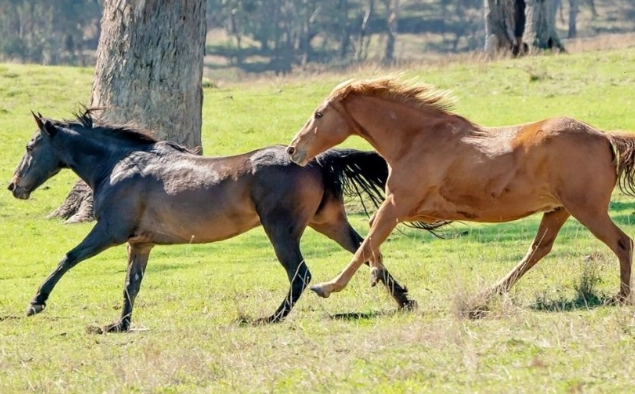
The truth is, asking "how fast do horses run" is like asking how fast cars drive. Are we talking about a vintage VW Beetle puttering to the store, or a Formula 1 car on a straightaway? The range is massive. A horse's speed isn't just one number—it's a spectrum defined by its gait, its breed, its fitness, and even its spirit on that particular day.
Let's ditch the vague guesses and get into the real numbers, the science, and the stories behind equine speed.
The Short Answer: A fit, average horse galloping at full speed can reach speeds of 25 to 30 mph (40 to 48 km/h). However, world-class racehorses, specifically Thoroughbreds and Quarter Horses, can shatter that ceiling, hitting 43 to 55 mph (69 to 88 km/h) in short, explosive bursts.
Breaking Down the Gaits: Speed Isn't Just About the Gallop
Before we get to the record-breakers, we need to understand the gears a horse has. You can't appreciate the top speed without knowing what they're shifting up from.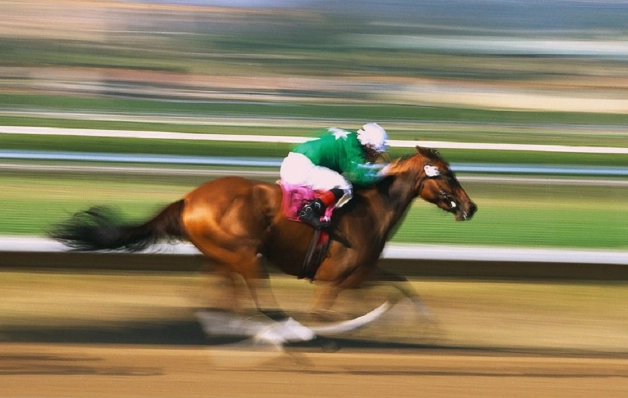
Horses have four primary natural gaits, each with a distinct speed range and footfall pattern. When people ask "how fast do horses run," they're usually picturing the gallop. But most of a horse's life is spent at slower, more sustainable paces.
The Walk (The Casual Stroll)
This is a four-beat gait where each foot hits the ground independently. It's relaxed, steady, and the pace you'd use for a long trail ride or cooling down. Think of it as a power-saving mode. Speed: 3 to 5 mph (4.8 to 8 km/h). You could easily walk alongside a horse at this pace.
The Trot (The Bouncy Jog)
A two-beat, diagonal gait (left front and right hind move together, then right front and left hind). It's efficient and faster than a walk. For riders, it can be a bit bouncy until you learn to "post" (rise and sit with the rhythm). This is a common working pace. Speed: 8 to 12 mph (13 to 19 km/h). A brisk human run.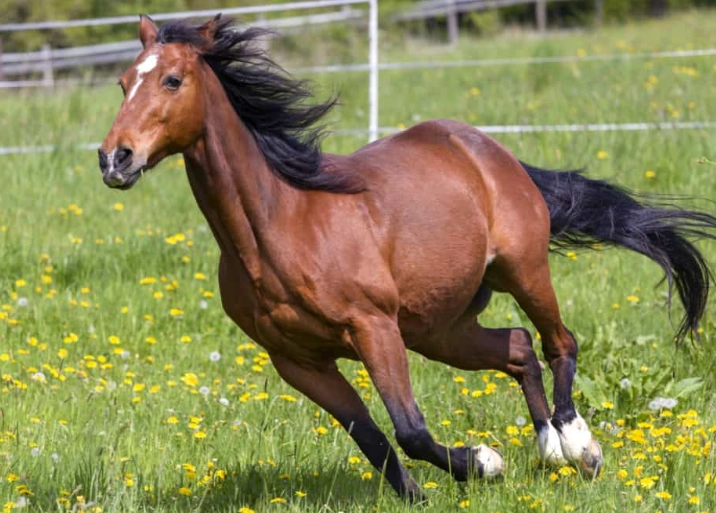
The Canter (The Rolling Lope)
A controlled, three-beat gait that feels like a rocking motion. It's smoother than a trot and the pace you see in movies when characters are "riding off into the sunset." It's faster but still manageable for miles if the horse is conditioned. Speed: 10 to 17 mph (16 to 27 km/h). Now we're moving at a good clip.
The Gallop (The All-Out Run)
This is it. The four-beat, flat-out run. All four feet are off the ground at one point during the stride cycle. It's powerful, exhilarating, and not sustainable. A horse can only maintain a true gallop for relatively short distances before fatigue sets in. This is where we get the big numbers. Speed: 25 to 30+ mph (40 to 48+ km/h), with elite athletes pushing far beyond.
See? The question "how fast do horses run" already has four different answers just based on gait.
The Need for Speed: What Makes One Horse Faster Than Another?
If you put my old trail horse, a sturdy Draft cross, next to a sleek Thoroughbred on a track, the difference would be laughable. It's not just training. Biology and breeding are the real game-changers.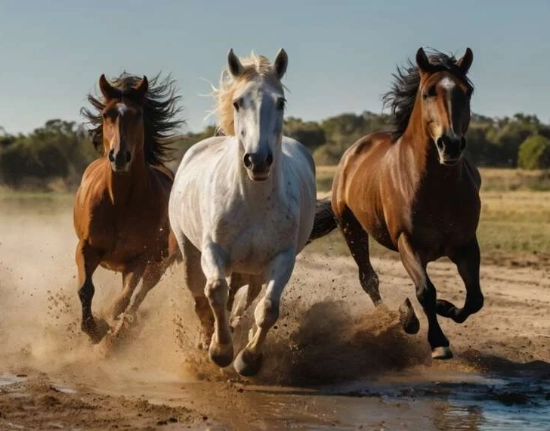
Let's look at the key factors:
- Breed & Genetics: This is the biggest one. Centuries of selective breeding have created equine specialists. Some breeds are built for stamina over long distances, others for explosive power over a quarter-mile.
- Conformation: That's a fancy word for body structure. Ideal "speed conformation" includes a long, sloping shoulder for a big stride, a strong, angled hindquarter for powerful propulsion, a deep chest for lung capacity, and long, light legs. It's all about levers and engines.
- Muscle Fiber Type: Fast-twitch muscle fibers contract quickly and powerfully but fatigue fast. Sprinters have more of these. Slow-twitch fibers are for endurance. The mix is largely genetic.
- Heart Size & VO2 Max: Literally, a bigger heart can pump more oxygenated blood. The legendary racehorse Secretariat had an autopsy-revealed heart estimated at 22 pounds, nearly three times the average horse's. His VO2 max (oxygen use efficiency) was likely off the charts.
- Training & Conditioning: You can have the best genetics in the world, but without systematic training to build cardiovascular strength, muscle, and mental focus, a horse won't reach its potential. It's like a gifted athlete who never practices.
- Terrain & Footing: A horse runs faster on a firm, well-maintained dirt track than in deep mud or sand. The surface matters a ton.
The Speed Champions: A Breed-by-Breed Breakdown
Okay, let's get to the exciting part. Which breeds answer the question "how fast do horses run" with the most impressive numbers?
Here’s a comparison of some of the fastest horse breeds in the world. Remember, these are peak speeds for elite representatives, not your average pasture pet.
| Breed | Primary Use | Top Recorded Speed (Approx.) | Notable For |
|---|---|---|---|
| American Quarter Horse | Sprinting, Rodeo, Ranch Work | 55 mph (88.5 km/h) | Unmatched acceleration over short distances (quarter-mile or less). Pure explosive power. |
| Thoroughbred | Flat Racing (Longer Distances) | 43-45 mph (69-72 km/h) | Sustained high speed over 1-2 miles. The kings and queens of the racetrack. |
| Arabian | Endurance Racing, Versatility | 40 mph (64 km/h) in sprints | Incredible stamina and "heart." Can maintain a fast pace for 50-100 miles. |
| Appaloosa | Versatility, Trail, Western Sports | 35-40 mph (56-64 km/h) | Surprising speed combined with hardiness and a unique spotted coat. |
| Standardbred | Harness Racing (Trotting/Pacing) | 30+ mph (48+ km/h) at a pace/trot | Extreme speed at a specific, non-galloping gait. A different kind of fast. |
| Mustang | – | 35-40 mph (56-64 km/h) | Natural selection created tough, agile, and surprisingly quick survivors. |
The Undisputed Sprint King: The American Quarter Horse
If the race is 440 yards or less, forget about it. The Quarter Horse is a dragster. They're built like muscular athletes with powerful hindquarters. The official record for the fastest speed by a Quarter Horse is 55 mph, achieved over a quarter-mile. That's acceleration that can throw a rider back in the saddle. The American Quarter Horse Association (AQHA) is the authority on the breed and documents these incredible feats of speed.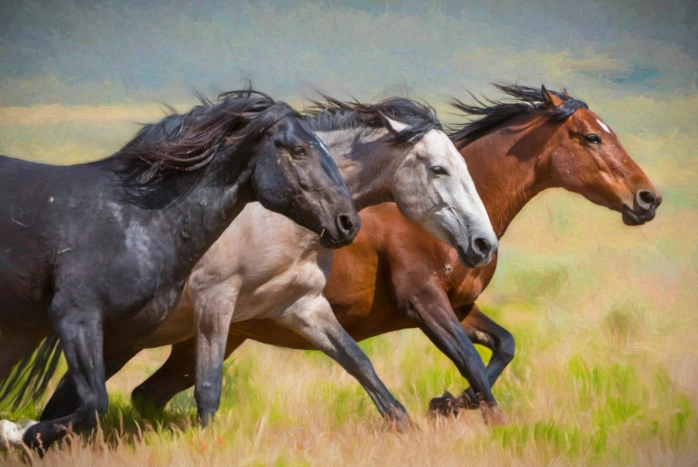
The Long-Distance Aristocrat: The Thoroughbred
This is the breed you see in the Kentucky Derby. While their top speed might be slightly lower than a Quarter Horse's peak, they can maintain a near-top speed for over a mile. Winning the Derby means running 1.25 miles at an average speed of about 37 mph—that's a sustained, grueling pace. Their leaner, taller build is optimized for this. The story of Secretariat winning the 1973 Belmont Stakes by 31 lengths, setting a still-unbroken world record time, is the stuff of legend. You can still analyze his breathtaking performance through historical race data.
So, which is truly faster?
It depends on the distance. Quarter Horse for a blinding short sprint. Thoroughbred for a longer, sustained run. It's a classic sprinter vs. miler debate.
Beyond the Track: How Fast Do Everyday Horses Run?
All this talk of 55 mph records can be misleading. Most horse owners will never sit on an animal that fast. So what's realistic for a typical riding horse?
Your average horse—think a mixed-breed trail horse, a healthy Arabian cross, a sturdy Morgan—is plenty fast enough to give you an adrenaline rush. A fit horse of common stock can comfortably canter at 15 mph for a while and, when asked or inspired, launch into a gallop hitting 25-30 mph.
Let me put that in perspective. 25 mph is faster than the speed limit in most residential areas. On horseback, feeling that power underneath you, it feels like you're flying. The wind is loud, the ground is a blur, and you're focused entirely on balance and motion. It's not something you do for long, but it's an incredible feeling.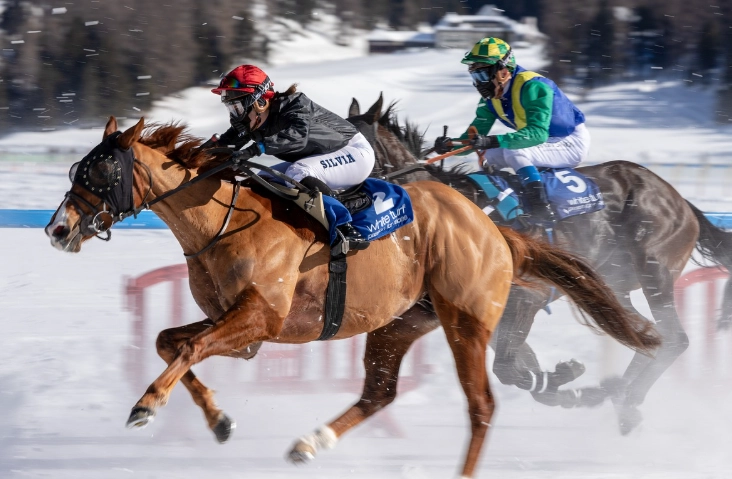
The thing is, galloping a horse cross-country isn't like a racetrack. You have to watch for holes, terrain changes, low branches. The risk goes up. So while they can run that fast, responsible riders often choose not to push the limit outside of controlled environments.
Your Burning Questions Answered (FAQs)
The Takeaway: It's More Than Just a Number
When you ask, "how fast do horses run," you're really asking about biology, history, and partnership. The speed is a product of thousands of years of evolution and selective breeding, shaped by human needs—from warfare to farming to sport.
The raw numbers are impressive: 55 mph is an astonishing feat of nature. But for most of us who love horses, the magic isn't just in the maximum velocity. It's in the feeling of a smooth canter across a field, the controlled power of a working horse, or the sheer athletic spectacle of a race. It's knowing the capability is there, even if you only tap into a fraction of it.
So next time you see a horse, whether it's in a paddock or on a screen, you'll have a better sense of the incredible potential contained in those powerful limbs. They're not just fast; they're masterpieces of motion, and their speed tells a story much bigger than a stopwatch ever could.
And honestly, that's more interesting than any single number.
Related Articles