Roundworms in Dogs: A Complete Owner's Guide
Let's be honest. The word "worms" makes most dog owners squirm. You picture something slimy and gross, and your first instinct is to Google it, fast. If you're reading this because you just saw something stringy in your dog's poop, take a deep breath. You're not alone, and more importantly, you're in the right place. Roundworms in dogs are one of the most common intestinal parasites you'll encounter, especially in puppies. They're not a death sentence, but they're not something to ignore either.
I've been a veterinarian for over a decade, and I still see the same wide-eyed panic from owners when I explain roundworms. It's understandable. The biology is frankly a bit horrifying. But let's push past the "ick" factor and get into what you actually need to know to protect your furry family member.
What You'll Learn in This Guide
- What Exactly Are Roundworms?
- How Do Dogs Get Roundworms?
- Symptoms: How to Tell if Your Dog Has Roundworms
- Getting a Diagnosis: What the Vet Will Do
- How to Treat Roundworms in Dogs: Your Options
- Preventing Roundworms in Dogs: A Realistic Strategy
- The Big Question: Can You or Your Family Get Roundworms?
The most important thing to understand right off the bat is that "roundworms" is a common catch-all name. The scientific name for the most common type, the one that gives everyone the creeps when they see it in puppy poop, is Toxocara canis. There's another type, Toxocara cati, but that's specific to cats (though dogs can get it too). For the sake of clarity in this guide, when we talk about roundworms in dogs, we're primarily focusing on Toxocara canis.
What Exactly Are Roundworms?
Imagine a long, spaghetti-like worm. That's the adult roundworm. They live in the small intestine of your dog. The females are prolific egg-layers. A single female can lay up to 200,000 eggs per day. These microscopic eggs are then passed out in your dog's feces and can survive in the environment for years, waiting to be picked up by another host.
Here's a visual that sticks with every new vet student: the eggs are incredibly resistant. They can survive freezing, heat, and even many common disinfectants. This is why environmental contamination is such a massive part of the control puzzle.
How Do Dogs Get Roundworms?
This is where many owners' understanding falls short. There are three main ways a dog becomes infected with roundworms:
1. Through the Mother (Transplacental or Transmammary Transmission)
This is the big one for puppies. If the mother dog is infected with roundworm larvae (the immature stage), these larvae can cross the placenta and infect the unborn puppies while they are still in the womb. This is called transplacental transmission. Even more commonly, the larvae can migrate to the mammary glands and be passed to the puppies through the mother's milk. This is transmammary transmission. This is why nearly every single puppy is born with roundworms or becomes infected very shortly after birth. It's not a sign of a "dirty" mother; it's a simple biological fact of the parasite's life cycle. A mother dog can have a dormant infection with no visible worms in her own stool, but still pass the infection to her offspring.
2. By Ingesting Roundworm Eggs from the Environment
This is the most common route for older dogs and puppies once they leave the nest. Those incredibly resilient eggs we talked about? They're in the soil, in the sand, in the grass, on toys, in water bowls—everywhere. A dog sniffs or licks contaminated soil, and the eggs are ingested. The eggs hatch in the dog's intestine, release larvae, and these larvae then undertake a truly bizarre journey.
3. By Eating an Infected Host (like a Rodent or Bird)
This is less common but still possible. The larvae can encyst (form a protective cyst) in the tissues of a small animal like a mouse or a bird. If your dog then hunts and eats that infected animal, the cysts break open in your dog's gut, and the larvae mature into adult worms in the intestine. This is why keeping your dog from hunting rodents is a good preventative measure, though not foolproof.
Symptoms: How to Tell if Your Dog Has Roundworms
This is the part people search for frantically. The symptoms of a roundworm infection can vary wildly. Some dogs, especially adults with a mild infection, may show no symptoms at all. This is why regular fecal checks are so important. For others, the symptoms can be severe and even life-threatening, particularly in puppies.
Common Symptoms in Dogs and Puppies
- Pot-bellied appearance (especially in puppies): This classic symptom is due to a large number of worms taking up space and nutrients in the gut.
- Diarrhea, sometimes with visible mucus or blood: The worms can irritate the intestinal lining.
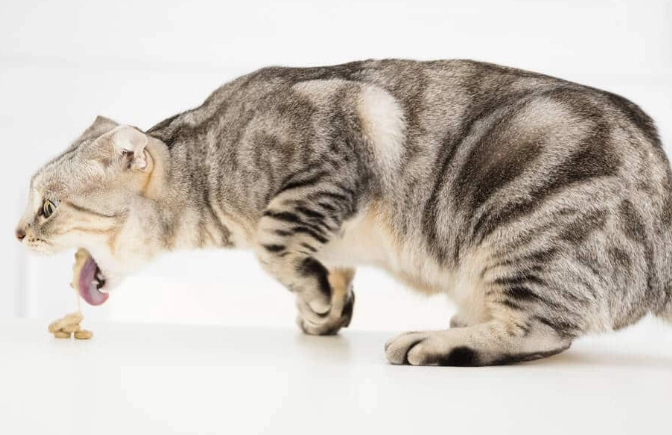
- Vomiting: Puppies may vomit up entire worms, which can look like spaghetti.
- Weight loss or failure to gain weight ("failure to thrive"): Despite eating a normal or even increased amount, the puppy isn't getting the nutrients because the worms are consuming them.
- Dull, rough, or dry coat: A general sign of poor health.
- Coughing or respiratory distress: This is a less common but serious sign. If the worm burden is very high, some of the larvae can migrate through the lungs, causing irritation and coughing.
- Visible worms in the stool or vomit: This is the most definitive, but also the most alarming sign. The adult worms are off-white, can be several inches long, and may be moving.
Let me share a case from my third year in practice. A family brought in their seemingly healthy 6-month-old Labrador retriever for a routine checkup. The dog was energetic, had a good appetite, but the owner mentioned he'd seen a "piece of rice" that moved in the stool once. That was it. No other symptoms. A fecal float revealed a moderate roundworm load. This is the perfect example of why you can't rely on symptoms alone.
The real danger, and what many online sources gloss over, is the asymptomatic carrier. An adult dog can host a low number of worms, show zero symptoms, but still be shedding millions of eggs into your backyard every single day. This is how re-infection cycles start, and how other dogs in the park become infected.
Getting a Diagnosis: What the Vet Will Do
You cannot diagnose roundworms based on symptoms alone. You must have a veterinarian perform a fecal examination. There are two main types of tests:
- Fecal Floatation (or "fecal float"): This is the most common and generally effective test. A small sample of your dog's stool is mixed with a special solution that causes parasite eggs (if present) to float to the top, where they can be collected and identified under a microscope. It's relatively inexpensive and quick.
- Direct Smear: Sometimes used if the float is inconclusive, but less common for routine screening.
Here's a piece of advice you won't find in many beginner guides: Always request a fecal test at your puppy's first vet visit, and then again at 6 months and 1 year of age, even if they are on a monthly heartworm preventative that claims to cover roundworms. Why? Because no preventative is 100% effective, and because roundworm eggs are so resilient, a single negative test does not mean your dog is in the clear. Eggs can survive in the environment for years, and a dog can become re-infected the very next day after being dewormed if they are re-exposed to a contaminated area.
How to Treat Roundworms in Dogs: Your Options
Treatment is straightforward once a diagnosis is confirmed. The goal is to eliminate the adult worms living in the intestine. There are several effective deworming medications available, and your veterinarian will choose the most appropriate one based on your dog's specific situation.
| Medication Name | How It Works | Key Points |
|---|---|---|
| Fenbendazole (e.g., Panacur, Safe-Guard) | Prevents the worms from absorbing nutrients, causing them to starve and die. | Often given for 3 consecutive days to ensure all worms are killed. Very safe, can be used in pregnant animals and very young puppies. |
| Pyrantel Pamoate (e.g., Strongid, Nemex) | Paralyzes the worms' nervous system, causing them to be expelled alive in the stool. | Usually given as a single dose. Works quickly. Can sometimes cause temporary drooling or vomiting. |
| Milbemycin Oxime (found in many heartworm preventatives like Interceptor, Sentinel, Trifexis) | Interferes with the worms' nerve transmission, leading to paralysis and expulsion. | Often combined with other medications for broad-spectrum coverage. A great example of a "convenience" dewormer included in a monthly heartworm preventative, but not effective against all types of roundworms. Check the label. |
| Praziquantel | Specifically targets tapeworms, not roundworms. | This is a critical distinction. Many owners mistakenly think a "dewormer" is a one-size-fits-all solution. Using the wrong medication does nothing against roundworms and wastes time and money. |
The treatment schedule is critical. Because the dewormer only kills the adult worms present in the intestine at the time of treatment, any remaining eggs in the environment (or inside your dog from an untreated source) can hatch and re-infect your dog. This is why a second dose is almost always given 2-3 weeks after the initial treatment. This second dose catches any newly hatched worms that survived the first round.
Let me give you a real-world scenario. A client of mine had two dogs. One was diagnosed and treated for roundworms. The owner diligently cleaned up the yard. But he didn't treat the other dog, who was an asymptomatic carrier. And he didn't treat the environment (the soil). Two months later, the first dog was re-infected. This cycle is so common it's almost predictable.
Preventing Roundworms in Dogs: A Realistic Strategy
Prevention is always better than cure, and it's absolutely achievable. It requires a multi-pronged approach:
- Regular Deworming: This is the cornerstone. Follow your veterinarian's recommended deworming schedule for puppies and adult dogs. This schedule is designed to break the life cycle of the worms before they can establish a significant population.
- Prompt and Proper Disposal of Feces: This is non-negotiable. Roundworm eggs are shed in the feces. By immediately and properly disposing of your dog's waste (using a sealed bag and placing it in a designated trash can), you dramatically reduce the environmental egg load.
- Environmental Control: This is the part most people miss. Roundworm eggs can survive for years in soil. If you have a known contaminated area (like a yard where an infected dog has defecated), talk to your vet about safe environmental disinfectants that can be used on soil. (Note: Complete sterilization of soil is virtually impossible). The best strategy is to prevent your dog from accessing known contaminated areas until they have been treated and the risk has passed.
- Treat All Dogs in the Household: If one dog is diagnosed, all dogs in the household must be treated, regardless of their test results. This is because of the high risk of cross-contamination and the possibility of asymptomatic carriers.
- Prevent Hunting: As mentioned earlier, preventing your dog from hunting and consuming potentially infected rodents or birds is a good preventative measure.
The most common mistake I see new owners make is only treating the symptomatic dog and then stopping all preventative measures. This is how re-infection cycles begin. You must treat all dogs, and you must maintain environmental hygiene and continue with your preventative deworming schedule.
The Big Question: Can You or Your Family Get Roundworms?
Yes. This is the most important section of this entire guide. Roundworms are zoonotic, meaning they can be transmitted from animals to humans. The primary route of transmission for humans is through contact with contaminated soil or sand containing infected roundworm eggs.
Let me be very clear: The risk is real, but it is manageable with proper hygiene. The eggs are shed in the feces of an infected dog. They can survive in the environment for years. Young children are at the highest risk because they are more likely to play in contaminated areas and put their hands in their mouths.
Infection in humans can lead to a condition called Visceral Larva Migrans (VLM) or Ocular Larva Migrans (OLM), where the larvae migrate through the body, potentially affecting organs, including the eyes. This is why public health campaigns emphasize the importance of picking up after your dog.
Frequently Asked Questions (FAQ)
Related Articles