Anole Lizard Care: The Complete Guide to a Happy, Healthy Pet
So you're thinking about getting an anole lizard, probably a green anole. They're cheap, small, and seem easy, right? That's the trap. I've kept anoles for over a decade, and I've seen more die from well-meaning but misinformed care than anything else. The biggest secret nobody tells you upfront? Anoles are not beginner "throw in a tank with a heat lamp" pets. They are delicate environmental specialists. Get their world right, and they'll thrive, displaying amazing colors and behaviors. Get it wrong, and they'll slowly waste away. This guide cuts through the pet store myths and gives you the real, detailed roadmap to success.
Your Quick Start Guide to Anole Care
Why Choose (or Reconsider) an Anole Lizard?
Let's be honest. Many people buy an anole on impulse because they're $10. That's a terrible reason. Here's what you're really signing up for.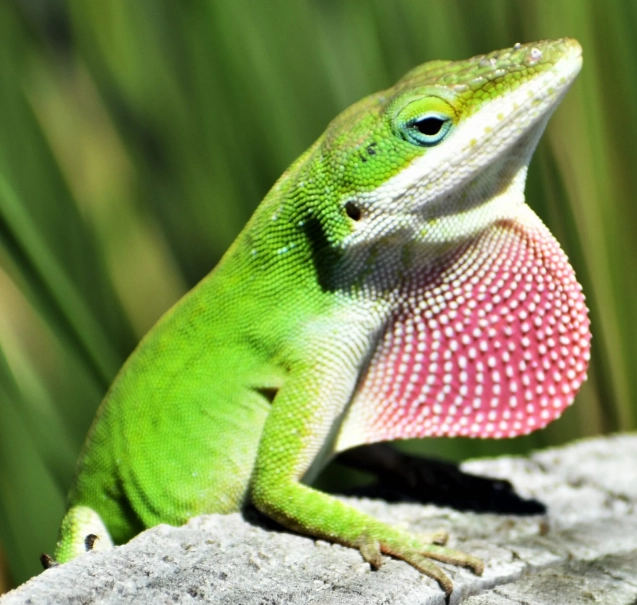
The Good: They are fascinating to watch. Males perform incredible dewlap displays (that red throat fan) to claim territory. Their color change from bright green to deep brown is a direct window into their mood and health. They're relatively quiet and don't need massive space. A properly set-up tank can be a beautiful living centerpiece.
The Not-So-Good: They are fast, fragile, and generally not for handling. They stress easily. Their care is more about precision engineering of their environment than direct interaction. You won't be cuddling this pet. Their lifespan in captivity is often cited as 3-5 years, but many die within the first year due to poor setup. With expert care, pushing towards 8 years is possible.
You should get an anole if you enjoy creating and maintaining a miniature ecosystem and observing natural behaviors. You should reconsider if you want a hands-on, interactive pet.
How to Set Up the Perfect Anole Habitat
This is where 90% of failures happen. The cage isn't just a box; it's their entire universe. Every element matters.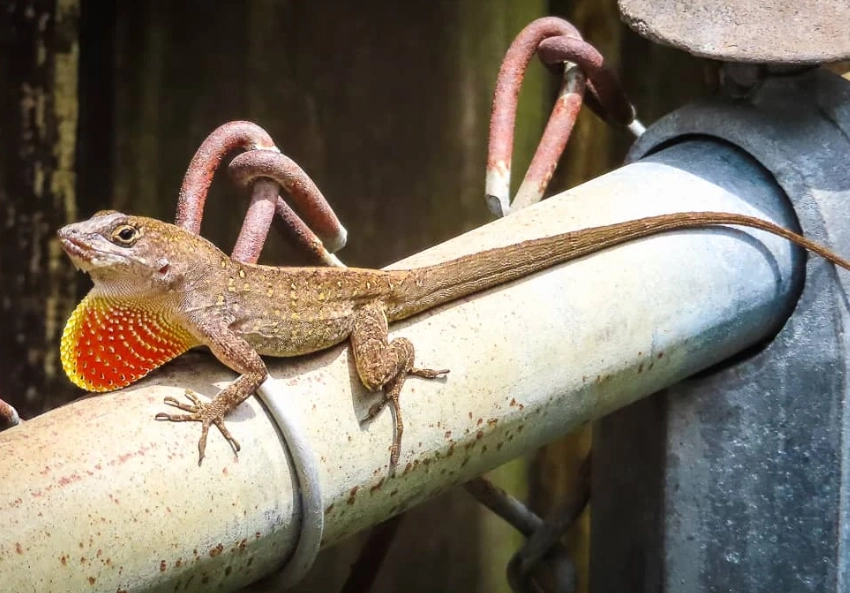
The Enclosure: Size and Type
Forget the 10-gallon tank kits. Absolute minimum for one anole is a 20-gallon tall (24"L x 12"W x 16"H). For a pair, go 30-gallon tall or larger. Height is non-negotiable—they are arboreal. Screen tops are essential for ventilation. Glass is better than plastic tubs because it holds heat gradients and humidity more effectively.
Heating and Lighting: The Non-Negotiables
This is the hill I will die on. You need two separate systems:
- Basking Lamp: A simple white incandescent or halogen bulb in a dome fixture. This creates a "sunspot" of 85-90°F (29-32°C) at the very top of the tank. The cool end should be 75-80°F (24-27°C). Use a digital thermometer with a probe to check the basking surface temperature, not the air.
- UVB Lamp: This is NOT optional. Anoles need UVB light to synthesize vitamin D3 and metabolize calcium. Without it, they develop Metabolic Bone Disease (MBD)—a slow, painful death. You need a linear fluorescent tube (like Zoo Med ReptiSun 5.0 or Arcadia ShadeDweller) that spans half the tank's length, mounted inside the screen or with the screen cut out (mesh blocks UVB). Replace it every 10-12 months, even if it still lights up.
Both lights should be on a 12-hours-on, 12-hours-off timer. Total darkness at night is fine; they don't need colored "night" bulbs.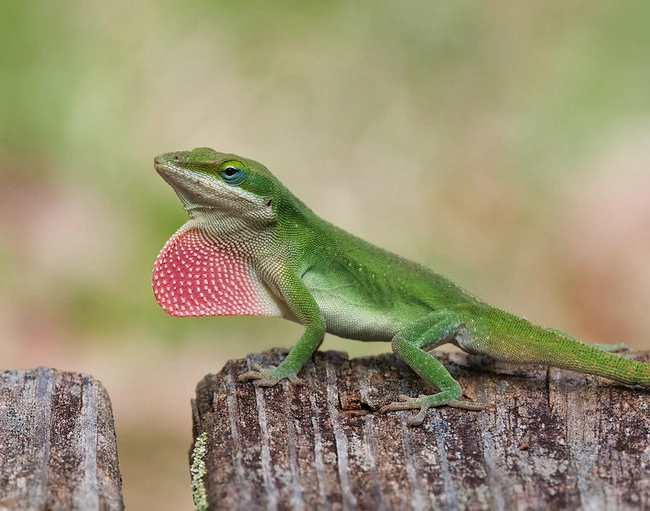
Humidity and Hydration
Anoles drink from water droplets on leaves, not a dish. Humidity should be 60-70%. You achieve this by:
- Misting the tank heavily 2-3 times daily with a spray bottle (manual or automatic).
- Using a moisture-retaining substrate like coconut fiber or a soil mix.
- Having live plants, which transpire water.
A small, shallow water dish is still good for raising ambient humidity.
Substrate and Decor: Building a Jungle
Flooring: Coconut coir, organic topsoil (no fertilizers), or a bioactive mix. Avoid sand, gravel, or bark chips (impaction risks).
Climbing structures are everything. Use a variety: driftwood, bamboo poles, cork bark flats and rounds, and sturdy vines. Create multiple pathways and hiding spots at all levels.
Live plants are superior to fake ones. They help with humidity and air quality. Good choices include Pothos, Philodendron, Spider Plants, and Ficus. Ensure any plant is reptile-safe and pesticide-free.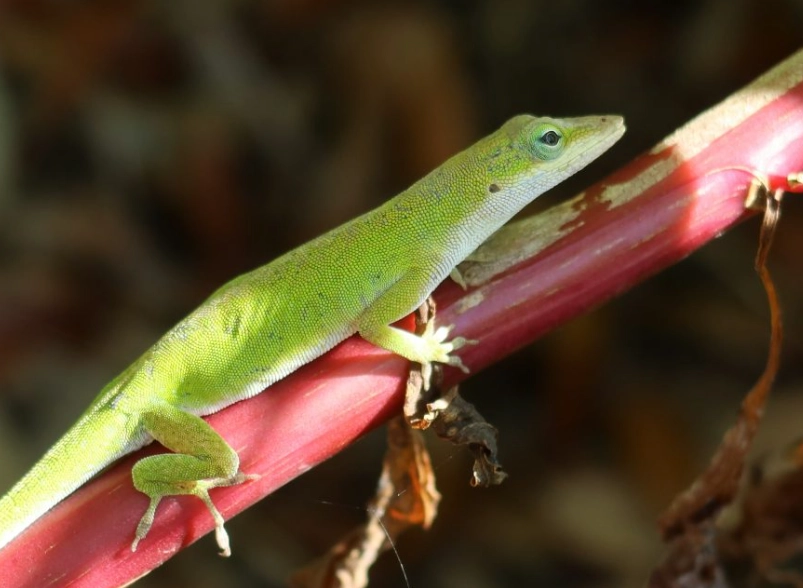
The One Thing You're Probably Getting Wrong: The "forest floor" look with a flat layer of leaves. Anoles rarely go to the bare ground. Focus your complexity and foliage in the vertical space. The middle third of your tank should be the most densely packed with climbing and hiding options.
Daily Care: Feeding, Hydration, and Handling
The Anole Diet
They are insectivores. Crickets are the staple, but variety is crucial for health.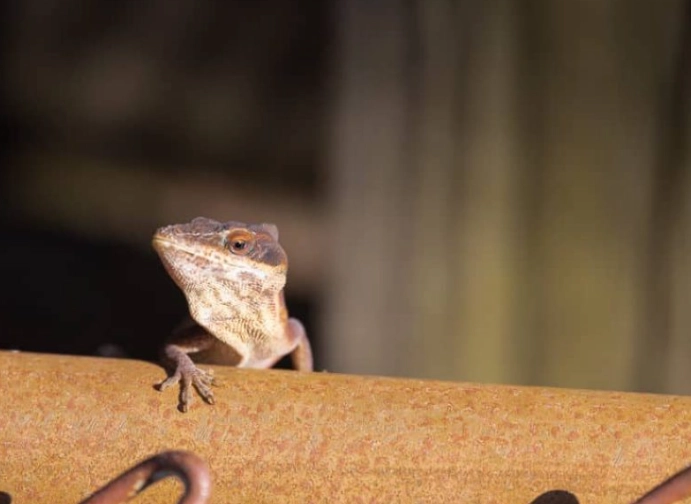
| Feeder Insect | Frequency | Notes |
|---|---|---|
| Gut-loaded Crickets | 3-4 small ones, every other day | Primary food source. "Gut-load" with veggies 24h before feeding. |
| Dubia Roaches | 2-3 small ones, 1-2x per week | Excellent nutrition, less noisy than crickets. |
| Black Soldier Fly Larvae (Calci-Worms) | 2-3, 1-2x per week | High calcium, no dusting needed. |
| Flightless Fruit Flies | For juveniles, 2-3x per week | Perfect tiny prey for baby anoles. |
| Waxworms or Mealworms | 1-2, as a rare treat (monthly) | High fat, can cause addiction. Use sparingly. |
Supplementation is mandatory. Dust insects with a high-quality calcium powder (without D3) at almost every feeding. Dust with a calcium + D3 powder and a multivitamin powder once a week each (rotate them).
Feed in the morning/afternoon when they are active. Remove uneaten insects after a few hours.
Hydration and Misting
Your daily misting sessions are their drinking fountain. Spray until leaves are dripping. Watch for them licking the water—it's a sign you're doing it right. Dehydration is a silent killer.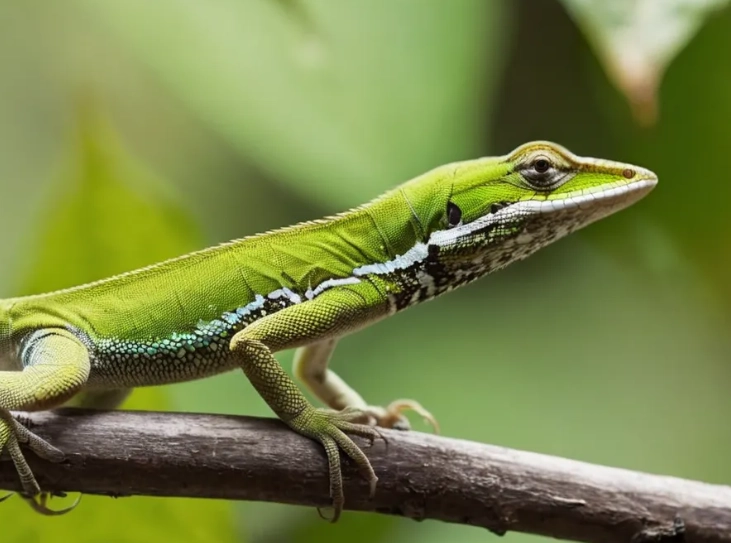
To Handle or Not to Handle?
Rarely, and with extreme care. They are escape artists and can drop their tails (autotomy) if stressed or grabbed. If you must, let them walk onto your hand voluntarily. Never restrain them. For tank maintenance, herd them gently into a temporary holding container.
Decoding Anole Behavior and Spotting Health Issues
Your anole's behavior and appearance are its health report card.
Normal/Good Signs:
- Bright green coloration when relaxed and warm.
- Active hunting and exploration, especially in the morning.
- Regular, complete sheds (they eat their shed skin).
- Dewlap displays by males (communication, not aggression).
Red Flags (Time to Investigate):
- Persistent brown coloration: Usually means stress, illness, or being too cold. Check temperatures first.
- Hiding constantly, lethargy, loss of appetite.
- Sunken eyes or visible hip/pelvic bones: Signs of dehydration or malnutrition.
- Swollen joints, rubbery jaw, difficulty climbing: Classic signs of Metabolic Bone Disease (MBD).
- Remnants of shed skin stuck, especially on toes or tail tip: Low humidity. Can lead to loss of digits.
- Rapid, open-mouth breathing: Could indicate a respiratory infection (often from low temperatures/high humidity).
For any serious health concern, find a qualified exotic veterinarian. Don't rely on internet forums alone.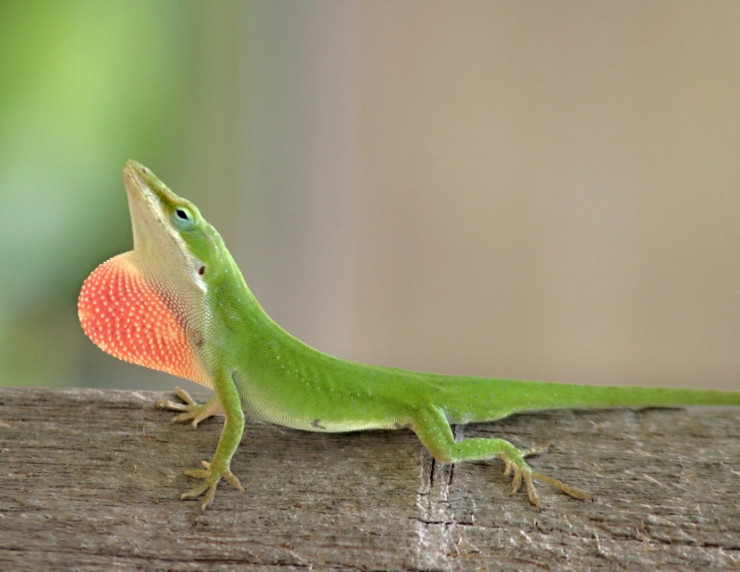
Advanced Topics: Cohabitation, Breeding, and Bioactive Setups
Keeping Multiple Anoles
It's tricky. Never house two male anoles together—they will fight to the death. Female-only groups can work in a large, heavily planted tank (30+ gallons for 2-3). Male-female pairs will likely breed. Be prepared for eggs and have a plan.
The Bioactive Route
This is the industry buzzword and for good reason. A bioactive setup introduces a clean-up crew (springtails and isopods) into a planted tank with a nutrient-rich soil substrate. This crew breaks down waste, molds, and leftover food, creating a self-sustaining ecosystem. It reduces cleaning, stabilizes humidity, and is incredibly enriching for the anole. It's more work upfront but less daily maintenance long-term. Resources like the Bioactive Dude on YouTube or forums like Dendroboard are great places to start.
Breeding Basics
If you have a pair, it will probably happen. Females will lay a single egg in the soft substrate every 1-2 weeks during the breeding season. You must find and remove these eggs to incubate them in a separate, moist vermiculite container at ~80°F. Hatchlings are tiny and require flightless fruit flies and meticulous care.
Your Anole Care Questions, Answered
My anole is dark brown and hiding all the time. Is it sick?
Check your temperatures first—this is the most common cause. Is the basking spot actually 85-90°F? Is the UVB lamp fresh and strong enough? Brown color usually means "I'm cold" or "I'm stressed." Ensure there are plenty of hiding spots near the warm end so it can feel secure while thermoregulating. If temps are perfect, then consider a vet check for parasites, which are common in wild-caught anoles.
How do I get my anole to eat? It ignores the crickets.
First, ensure it's drinking. Dehydration kills appetite. Try offering different prey. Sometimes anoles get bored. Try small dubia roaches or black soldier fly larvae. Make sure the prey is moving. You might need to crush a cricket's head slightly to release scent and wiggle it with tongs near the anole. Also, review your supplement dusting—too much powder can deter them. Try a lighter dusting.
Can I use a heat mat under the tank for my anole?
No. Heat mats are for belly heat, which is useful for terrestrial snakes but not for arboreal lizards. Anoles heat themselves from above, basking under a lamp. A heat mat on the bottom won't effectively warm the air they live in and can even overheat the substrate, creating a hazard without providing the right kind of warmth.
What's the deal with " Cuban brown anoles" vs. "green anoles"?
They're different species, often confused. The "American Green Anole" (*Anolis carolinensis*) is the common pet, native to the SE US, and can change from green to brown. The "Cuban Brown Anole" (*Anolis sagrei*) is an invasive species, is typically brown with pattern, and is more terrestrial and aggressive. They should not be housed together, as brown anoles will outcompete and stress green anoles. Know which one you have.
My anole's tail broke off! Will it grow back?
Yes, they can regenerate tails, but the new one won't be perfect. It will be shorter, darker, and made of cartilage instead of bone. The important thing is to keep the wound clean (a bit of diluted betadine can help) and reduce stress. Ensure it's eating well, as regeneration takes extra energy. The tail won't grow back if the animal is malnourished or stressed.
Keeping anoles is a commitment to detail. It's about building a world, not just filling a tank. When you see that bright green lizard confidently patrolling its vertical jungle, basking under its lamp, and snatching crickets with precision, you'll know the effort was worth it. Start right, with a proper-sized, properly equipped habitat, and you'll give your anole the best chance at a long, healthy life. Skip the shortcuts.
Related Articles