How Fast Do Horses Run? Top Speeds, Breeds & Racing Facts
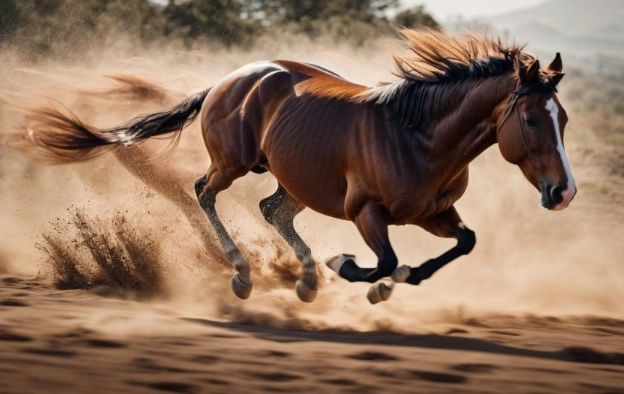
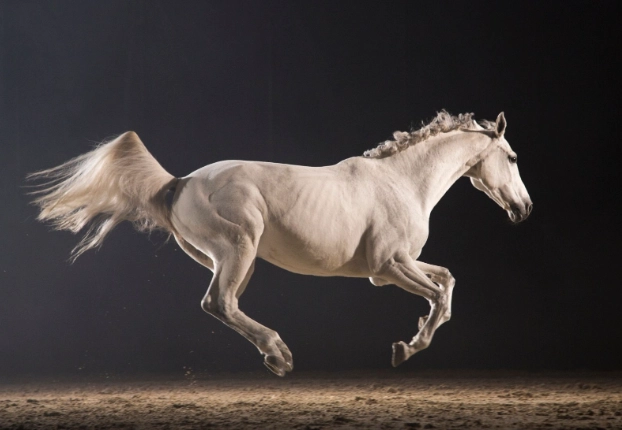
You see them thundering down the track at the Kentucky Derby, or maybe you've watched a Western where a cowboy's horse kicks up dust in a chase. It's natural to wonder, just how fast do the horses run, really? Is it 30 miles per hour? 40? More? Well, I remember the first time I stood trackside at a local quarter horse race. The sound hit me first—a deep, rhythmic pounding that vibrated right through the ground. Then they blurred past. The whole thing was over in under 20 seconds. It felt impossibly fast, almost like a trick of the eye. That experience got me digging into the numbers, and let me tell you, the reality of equine speed is a fascinating mix of biology, breeding, and sheer athletic power. The short answer is that a top-tier racehorse can hit speeds between 40 to 45 miles per hour (or 64 to 72 kilometers per hour). But that's just the headline. The real story is in the details. How fast do the horses run depends on a ton of factors—their breed, their distance, their training, and even their individual spirit. A massive draft horse pulling a wagon and a sleek Thoroughbred are both horses, but they're built for completely different jobs. Key Takeaway: Don't think of horse speed as one number. Think of it as a spectrum. On one end, you have the explosive, short-distance sprinters. On the other, you have the endurance athletes built for the long haul. Where a horse falls on that spectrum tells you a lot about its purpose and its history. Asking "how fast do the horses run" is a bit like asking how fast humans run. A professional sprinter and a marathon runner have very different top speeds and specialties. Horses are the same. Breed is the single biggest factor determining their potential velocity. Let's look at the leaders of the pack. If you want pure, unadulterated acceleration, look no further. The American Quarter Horse is the drag racer of the equine world. Bred originally for short-distance races down village quarters (hence the name), these horses are muscle-packed powerhouses. Their claim to fame is the quarter-mile (about 400 meters). They can blast out of the gate and reach their mind-bending top speed in just a few strides. The official record for the quarter-mile is held by a Quarter Horse named Long Bar, who clocked a time of 20.57 seconds back in 2005. If you do the math, that's an average speed of around 43.5 mph (70 km/h) over the entire distance, with a peak speed certainly higher. I've seen them up close, and their hindquarters are just unreal—all coiled power. They're not built for a long fight; they're built for a quick, decisive explosion. When people picture a rodeo horse or a cutting horse, they're often picturing a Quarter Horse. That quick-twitch muscle fiber is what makes them so agile, too. Now, flip the script entirely. The Arabian horse is the ultramarathoner. They won't win a 100-meter dash, but ask them to go 100 miles, and they'll do it while looking elegant. Their speed is about sustained effort, not a fleeting peak. Built with a distinctive dished face, large nostrils, and a light frame, Arabians are incredibly efficient. They have one less lumbar vertebra and rib than other breeds, which some believe contributes to their stamina. In endurance races, which can cover 50 to 100 miles in a single day, Arabians dominate. Their average speed over such a grueling distance might be a trot or a steady canter—perhaps 10-15 mph—but the fact they can maintain any speed for that long, over rough terrain, is the true marvel. It's a different kind of "fast." This is the breed most people think of when they think "racehorse." The Thoroughbred is the middle-distance specialist, the balance between raw power and staying power. Bred for the English racing scene since the 17th century, they are the athletes of the Kentucky Derby, the Preakness, and the Belmont Stakes. So, how fast do the horses run in the Kentucky Derby? The race is 1.25 miles (about 2 kilometers). The record, set by the legendary Secretariat in 1973, is 1:59.40. That's an average speed of just over 37.5 mph (60 km/h) for the entire race. His final quarter-mile was run in under 23 seconds—a pace that would embarrass many pure sprinters at the end of such a long race. It's arguably one of the greatest athletic performances ever recorded. Thoroughbreds are tall, lean, and have a huge heart (literally—Secretariat's heart was estimated to be nearly twice the normal size, a condition found in some elite performers). They represent the pinnacle of selective breeding for speed over intermediate distances. *An Arabian's peak sprint speed can be high, but their genius lies in maintaining a strong pace over incredible distances. You'll see some sources claim Quarter Horses can hit 55 mph. The Guinness World Records credits a Thoroughbred named Winning Brew with hitting 43.97 mph (70.76 km/h) over a quarter-mile in 2008. But here's the thing—measuring a precise peak speed in a living, breathing animal over a few strides is incredibly tricky. Radar guns, track conditions, and the horse's willingness all play a role. The 55 mph figure is often cited but is debated among experts. I tend to trust the officially timed race records over anecdotal claims. The 43-45 mph range for the absolute fastest is widely accepted and still utterly breathtaking. Okay, so we know some breeds are faster. But why? What's going on under the hood when we ask how fast do the horses run? It's a perfect storm of evolutionary biology and careful breeding. First, the biomechanics. Horses are essentially running on their fingernails. Their hoof is a single, giant toe (the third digit), which allows for a long, lightweight leg with powerful tendons that act like springs. This "spring-loaded" leg stores and releases energy with each stride, making their gallop incredibly efficient. Their gallop has a unique four-beat rhythm and includes a moment of suspension where all four feet are off the ground. The more time spent in the air, the faster the potential speed. Watch a slow-motion video of a racehorse—it's like watching a series of powerful leaps. The Speed Factors Checklist: When evaluating a horse's potential or actual speed, these are the pieces of the puzzle. It's this combination that separates the champions from the also-rans. You can breed for most of these traits, but that final spark of competitive desire? That's magic. Records give us the numbers, but stories give us the context. A few horses have transcended the sport to show us the outer limits of possibility. Secretariat ("Big Red"): We have to start here. His 1973 Triple Crown performance is the gold standard. He didn't just win the Belmont Stakes by 31 lengths to seal the Triple Crown; he shattered the world record by over two seconds. His times in all three races still stand as track records at Churchill Downs, Pimlico, and Belmont Park. Experts have analyzed his stride and believe it was longer and more efficient than any horse before or since. He made you rethink what was physically possible. The Kentucky Derby Museum has fantastic exhibits on him if you're ever in Louisville. Frankel: This early 21st-century European champion was a monster on the track. He retired undefeated (14-0). His speed was coupled with a devastating acceleration that would break the spirits of other elite horses in a matter of strides. He won at a mile, which is a tricky distance requiring both speed and stamina. Winx: An Australian marvel known for her sustained speed and incredible will. She won 33 races in a row, many of them by finding an extra gear in the final stretch that simply didn't seem to exist for her rivals. She answered the question of how fast do the horses run not with a single peak number, but with a relentless, winning pace race after race after race. This isn't just trivia. Knowing how fast do the horses run, and what affects it, is crucial for anyone involved with them. For an owner or rider, it informs training. You don't train an endurance Arabian the same way you train a barrel-racing Quarter Horse. You need to build the right kind of fitness. Pushing a horse for long, slow distances to build stamina is great for a trail horse, but won't create a sprinter. It's also vital for safety. Understanding that a horse's instinct is to flee from danger at high speed explains a lot of spooking behavior. Knowing their physical limits prevents you from asking for a dangerous, sustained gallop on a horse that isn't fit enough, which can lead to injury or breakdown. For the racing industry, it's the core of the business. Every decision in breeding, feeding, and training is aimed at finding that extra fraction of a second. The science of track surfaces, for example, has evolved dramatically to try and create a fast yet safe footing that reduces injuries. Organizations like the National Thoroughbred Racing Association (NTRA) are deeply involved in this research. And for the rest of us? It's just pure appreciation. When you watch a race, you're not just watching animals run in a circle. You're watching millions of years of evolution as a prey animal, combined with centuries of human selective breeding, combined with years of careful training, all funneled into a two-minute test of heart and lungs and muscle. It's raw, beautiful athleticism. The next time you see a horse, whether on a screen or in a field, you'll have a better sense of the incredible potential in that body. You'll know that the answer to "how fast do the horses run" is a complex, layered story of biology, history, and heart. And that story is far more interesting than any single number on a speed gun.In This Article
Breaking Down the Speed by Breed: It's Not One-Size-Fits-All
The Sprint King: The American Quarter Horse
The Endurance Champion: The Arabian
The Classic Racer: The Thoroughbred
Breed
Top Speed (Approx.)
Prime Distance
What They're Built For
American Quarter Horse
43-55 mph (69-88 km/h)
Quarter-mile / 400m
Explosive sprinting, rodeo, ranch work
Thoroughbred
40-45 mph (64-72 km/h)
1-1.5 miles / 1.6-2.4 km
Flat racing (e.g., Kentucky Derby)
Arabian
34-40 mph (55-64 km/h)*
50-100 miles / 80-160 km
Endurance racing, long-distance travel
Standardbred
30-35 mph (48-56 km/h)
1 mile / 1.6 km (harnessed)
Harness racing (trotting/pacing)
Appaloosa
35-40 mph (56-64 km/h)
Short to medium
Versatility, trail riding, hunting
What Makes a Horse Fast? It's More Than Just Legs
The Legends: When We Truly Saw How Fast Horses Could Run
Your Questions Answered: The Nitty-Gritty on Horse Speed
Beyond the Track: Why Understanding Speed Matters