Angelfish Care Guide: Types, Tank Setup, Feeding & Disease Prevention
Quick Navigation
- What Exactly Are Angelfish? More Than Just a Pretty Face
- Setting Up the Perfect Angelfish Aquarium: Don't Skimp Here
- Feeding Your Angelfish: Beyond the Flakes
- Health and Disease: Prevention is Everything
- The Angelfish Social Life: Tank Mates and Aggression
- Breeding Angelfish: The Ultimate Reward
- Your Angelfish Questions, Answered
So you're thinking about getting some angelfish? I get it. Those elegant, flowing fins and that majestic, almost haughty swimming style can make any aquarium look like a living piece of art. I remember the first time I saw a school of them gliding through a planted tank – it was hypnotic. But here's the thing nobody tells you right away: keeping angelfish healthy and happy isn't as straightforward as dropping them into any old tank. They have a reputation for being a bit… fussy. And sometimes, downright difficult.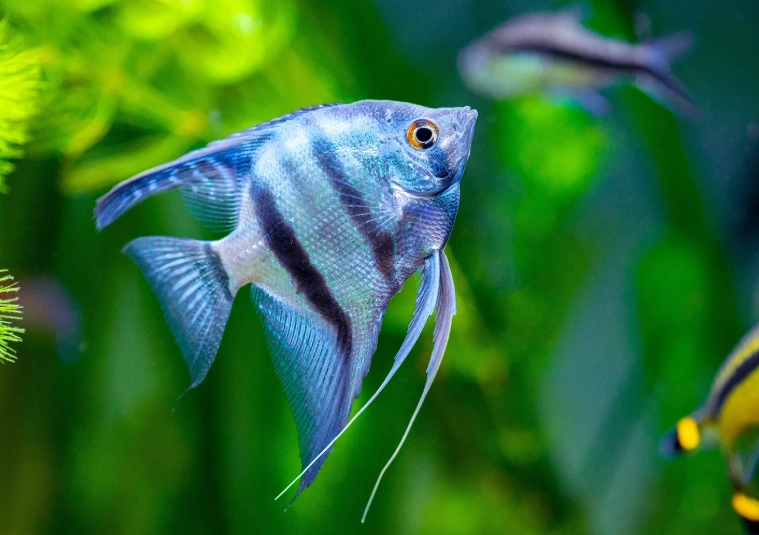
I've made my share of mistakes. I've lost a beautiful marble angelfish to a disease I didn't spot in time, and I've watched in horror as a supposedly peaceful community tank turned into a battlefield because my angel's personality was more territorial than expected. That's why I wanted to write this. Not as some flawless expert, but as someone who's learned the hard way what these stunning fish need to thrive.
What Exactly Are Angelfish? More Than Just a Pretty Face
Angelfish are freshwater cichlids native to the slow-moving rivers, swamps, and floodplains of the Amazon Basin in South America. That origin story is crucial – it tells you everything about the water conditions they crave. They're not goldfish. They're intelligent, social to a point, and can live for a good 10 years or more with proper care. That's a decade-long commitment.
Their unique disc-shaped, vertically flattened bodies are an adaptation for hiding among roots and tall plants. In the wild, they're ambush predators, snatching up small fish and invertebrates. That predatory instinct doesn't just vanish in your home aquarium, which is a key point we'll come back to when talking about tank mates.
The Many Faces of Angelfish: Wild Types vs. Fancy Varieties
Walk into a fish store, and you'll be bombarded with choices. It's easy to just pick the prettiest one, but knowing the background helps. Broadly, they fall into two camps.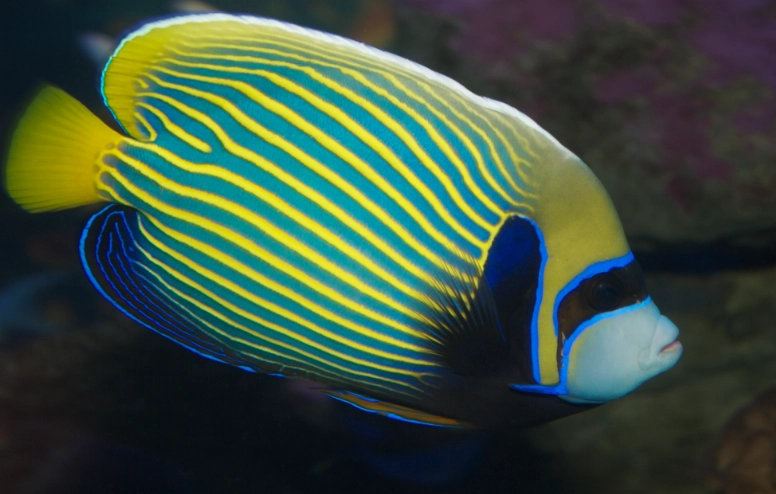
The wild-type or silver angelfish is closest to the original fish found in the Amazon. It has a silver body with strong vertical black stripes that can intensify or fade based on mood and stress. They're often hardier, in my experience. Then you have the cultivated varieties, bred for specific colors and patterns. Some are stunning. Others, frankly, look a bit overbred to me. The genetics for some fancy types can make them slightly more delicate.
Here’s a quick breakdown of common types you’ll encounter:
| Type/Variety | Key Characteristics | My Notes on Hardiness & Care |
|---|---|---|
| Silver/Wild Type | Silver body, 4 dark vertical stripes. | Often the most robust. A great choice for beginners dipping into angelfish care. |
| Koi Angelfish | Orange, black, and white patches, resembling koi fish. | Very popular. Can be a bit variable in pattern. Generally hardy if from a good source. |
| Marble Angelfish | Black and silver marbled pattern. Patterns are unique. | Beautiful, but I've found some lines can be more prone to nervousness. |
| Black Lace / Black Angel | Entirely black or dark gray with lace-like fin edges. | Striking in a planted tank. Can sometimes show less defined stripes when stressed. |
| Blushing Angelfish | Light body (often gold or silver) with red/orange gill covers. | The "blush" is permanent. Some seem more sensitive to water quality swings. |
| Altum Angelfish | Pterophyllum altum. Much taller, more pronounced forehead. Very faint stripes. | Not for beginners. Requires extremely soft, acidic water and is often wild-caught. A specialist fish. |
See that last one? Altum angels are a different species entirely and are a whole other level of challenging. For 99% of hobbyists, the common angelfish (Pterophyllum scalare) and its varieties are the way to go.
Setting Up the Perfect Angelfish Aquarium: Don't Skimp Here
This is where most failures happen. People put a pair of angelfish in a 20-gallon tank with some neon tetras and wonder why things go south. Your tank setup is the foundation of everything.
Tank Size: Bigger is Always, Always Better
So, how big of a tank do you really need for angelfish? The old minimum of 20 gallons is, in my blunt opinion, cruel and outdated. An angelfish can grow to be 6 inches tall (body length plus fins) and nearly as long. They need vertical swimming space.
For a pair of angelfish, I wouldn't go smaller than a 30-gallon tall tank. But honestly, a 55-gallon tank is a fantastic starting point. It gives them room to establish territories, reduces aggression, and makes water quality management infinitely easier. If you want a small group (which I recommend, as they are social), aim for a 75-gallon or larger. Trust me, the extra cost upfront saves money and heartache later.
Water Parameters: Recreating the Amazon at Home
This isn't a suggestion; it's a requirement. Angelfish are soft water, slightly acidic fish. You can't ignore this and expect them to be vibrant and healthy long-term.
- Temperature: 78°F - 84°F (26°C - 29°C). I keep mine at a steady 80°F. Stability is key—big swings cause stress.
- pH: 6.8 - 7.5 is the safe range. They can adapt to slightly higher pH if it's stable, but they truly thrive in the 6.8-7.0 range. My tap water is neutral (7.0), and they do great.
- Hardness: Soft to moderately soft water (dGH 3-10). High mineral content (hard water) can lead to long-term kidney and osmotic stress.
- Ammonia & Nitrite: ZERO. Always. These are deadly.
- Nitrate: Keep it as low as possible, ideally under 20 ppm. Regular water changes are non-negotiable.
How do you know your water? Test it. Get a reliable liquid test kit like the API Freshwater Master Test Kit. Test strips are often inaccurate. You need to know what's coming out of your tap and what's happening in your tank. The Florida Museum of Ichthyology has a great profile on Pterophyllum that confirms these tropical, soft-water requirements if you want an authoritative source.
Filtration, Heating, and Decor
Filtration should be strong but not create a raging current. Angelfish come from slow waters. A hang-on-back (HOB) filter or a canister filter with an adjustable flow rate is perfect. Aim to filter the entire tank volume at least 4-5 times per hour. For a 55-gallon tank, that's a filter rated for 220-275 gallons per hour (GPH).
A high-quality, adjustable heater with a guard is essential. I use two smaller heaters instead of one big one for redundancy. If one fails, the other keeps the tank from crashing.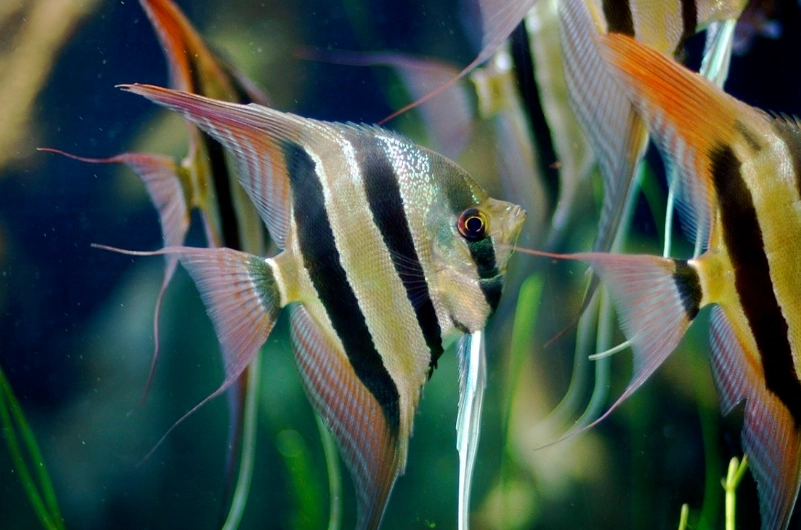
Now for the fun part: decor. Tall plants are not just decoration; they're security. Amazon swords, Vallisneria, and tall stem plants are excellent. Driftwood is fantastic—it releases tannins that soften water and lower pH slightly, mimicking their blackwater origins. Smooth rocks can be used. Avoid sharp decorations that can tear their delicate fins. A dark substrate (sand or fine gravel) makes their colors pop and feels more natural.
Feeding Your Angelfish: Beyond the Flakes
In the wild, an angelfish's diet is diverse. Replicating that variety is the secret to great health, color, and breeding condition. A diet of nothing but generic fish flakes is a recipe for nutritional deficiencies.
Staple Diet: A high-quality pellet or flake food formulated for cichlids should be the base. Look for ones with good protein sources (like fish meal, shrimp) and spirulina.
Essential Supplements & Treats:
- Frozen or Live Foods: Brine shrimp, bloodworms (sparingly—they're fatty), mysis shrimp, and daphnia. These are like vitamins. I feed frozen foods 3-4 times a week.
- Vegetable Matter: Yes, they need greens. Blanched zucchini slices, spinach, or high-quality spirulina wafers. My angels go crazy for a little piece of zucchini pinned to the bottom.
Feeding Schedule: Small amounts 2-3 times a day, only what they can consume in about 30-60 seconds. Overfeeding pollutes the water. One day a week, I skip feeding entirely. It gives their digestive systems a break and helps keep the tank cleaner.
Health and Disease: Prevention is Everything
Healthy angelfish are active, have a good appetite, and their fins are held high. When something's wrong, they tell you quickly. The most common issues are almost always related to poor water quality or stress from the wrong environment.
Common Angelfish Ailments
- Ich (White Spot Disease): The classic. Tiny white salt-like spots on fins and body. Fish may flash (scratch) against objects. Caused by a parasite, often triggered by stress or temperature drops. Treatment involves raising the temperature gradually to 86°F for 10-14 days or using a copper-based or formalin/malachite green medication. Remove carbon from your filter during treatment.
- Fin Rot: Fins look ragged, milky, or like they're melting. Usually a bacterial infection following fin damage or poor water quality. Fix the water first! Then antibacterial treatments like those containing erythromycin can help. I've had success with frequent small water changes and aquarium salt for mild cases.
- Hole-in-the-Head Disease (Hexamita): Pits or lesions on the head and lateral line. Linked to poor nutrition and water quality, and a flagellate parasite. Improving diet and water is step one. Metronidazole is the common treatment, often mixed into food.
- Bloat/Dropsy: Swollen abdomen, scales sticking out (pineconing). This is often a symptom of severe internal organ failure, usually from chronic poor conditions. It's very hard to cure. Prevention through excellent care is the only reliable strategy.
The University of Florida's Tropical Aquaculture Laboratory provides valuable, research-based resources on diagnosing and managing these common aquarium fish diseases, which is far better than just guessing from online forums.
The best medicine? Quarantine any new fish in a separate tank for at least 2-4 weeks before adding them to your main display. It sounds like a hassle, but losing your entire established tank to a disease from one new fish is a nightmare you want to avoid.
The Angelfish Social Life: Tank Mates and Aggression
Angelfish are cichlids. They have personalities. Some are mellow; some are bullies. When they pair off to breed, they become fiercely territorial. Choosing tank mates isn't just about what looks good; it's about survival.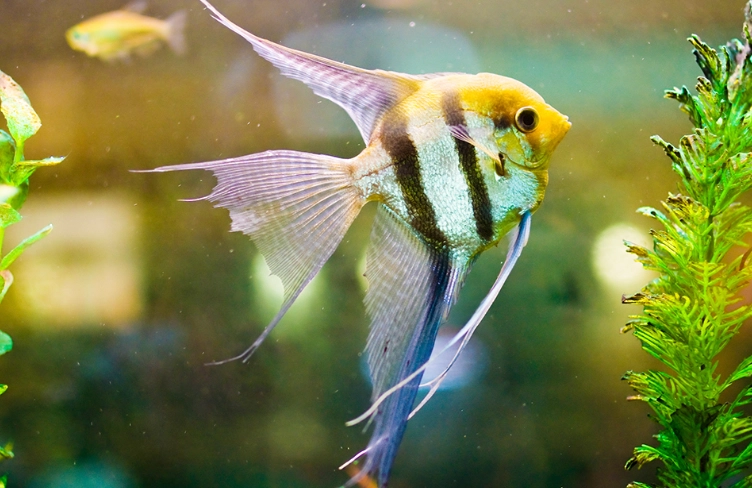
Good Tank Mates (Generally Safe):
- Mid-to-Bottom Dwellers: Corydoras catfish, bristlenose plecos, larger peaceful loaches (like clown loaches). They stay out of the angel's space.
- Peaceful, Similar-Sized Fish: Larger tetras like Congo tetras, bleeding heart tetras, or diamond tetras. They're too big to be eaten.
- Other Peaceful Centerpiece Fish: Gouramis (like pearls or blues) can sometimes work in very large tanks, but watch for aggression from either side.
- Other Angelfish: Keeping a small group (5-6 juveniles) lets them form a hierarchy and often reduces aggression directed at other species. They may pair off and chase each other, but that's normal.
Bad Tank Mates (Usually a Disaster):
- Small Fish: Neon tetras, cardinal tetras, chili rasboras. In many tanks, these become expensive angel snacks. Some people get away with it in heavily planted tanks, but it's a constant risk. I learned this the hard way.
- Nippy Fish: Tiger barbs, serpae tetras. They will relentlessly nip the long fins of angelfish, leaving them stressed and shredded.
- Aggressive or Territorial Cichlids: Oscars, Jack Dempseys, etc. They will see the angelfish as food or competition.
- Slow-Moving, Long-Finned Fish: Fancy guppies, betta fish. Angels may mistake them for rivals or simply pick on them.
Breeding Angelfish: The Ultimate Reward
If you get everything right—the tank, the water, the food—you might be rewarded with a pair forming and breeding. It's one of the most fascinating processes in the hobby.
You'll know a pair has formed when two fish start hanging out together, defending a corner of the tank, and cleaning a vertical surface (like a broad leaf, a piece of slate, or even the filter tube). Their breeding tubes (a small pointed protrusion near the vent) will become visible.
They lay rows of eggs on the cleaned surface. The parents will fan the eggs with their fins to keep them oxygenated and will fiercely defend them. The eggs hatch in about 2-3 days, and the wrigglers are moved by the parents to a pit in the substrate. After another 5-7 days, they become free-swimming fry.
Now, a dose of reality. First-time parents often eat their eggs or fry. It's disheartening, but common. Sometimes they figure it out on the second or third try. If you want to raise the fry, you can remove the eggs (with the surface they're on) to a separate tank with gentle aeration and add a few drops of methylene blue to prevent fungus. Raising the fry requires feeding them microscopic foods like infusoria or commercial fry food, then moving to baby brine shrimp.
I remember my first successful batch. The work was exhausting—hatching brine shrimp at 2 a.m.—but watching hundreds of tiny angels swimming was utterly magical. It connects you to the lifecycle in a profound way.
Your Angelfish Questions, Answered
Are angelfish good for beginners?
They can be a good second fish. If you've successfully kept a community tank (like tetras and corys) for 6 months and managed stable water parameters, you're ready for the angelfish challenge. As a true, absolute beginner's first fish? I'd recommend starting with something hardier like danios or platies to learn the basics of the nitrogen cycle and maintenance first.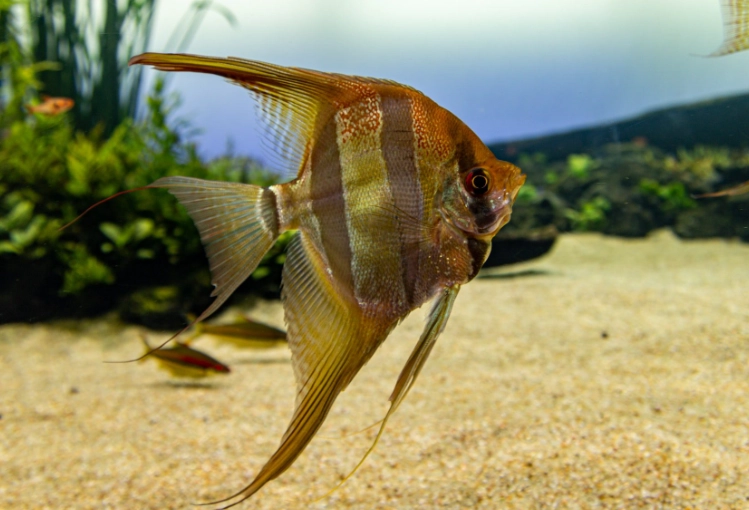
How long do angelfish live?
With optimal care, 10+ years is absolutely achievable. I know people with 12-year-old angels. The average in a typical home aquarium is probably 5-8 years, often cut short by preventable issues.
Why is my angelfish hiding or lying on its side?
Hiding constantly is a sign of severe stress—check water quality, tank mates, or if it's being bullied. Lying on its side at the bottom is a major emergency. It could be severe swim bladder disease, a systemic infection, or advanced organ failure. Immediate isolation (hospital tank) and diagnosis are needed.
Can I keep just one angelfish?
You can, but I don't think it's ideal. They are social within their own kind. A single angelfish can become withdrawn or, conversely, direct all its territorial energy onto other tank mates. A small group (where they can sort out their hierarchy) or at least a pair often leads to more natural, balanced behavior.
How can I tell if my angelfish is male or female?
It's notoriously difficult until they are mature and ready to breed. Even then, it's not always obvious. The most reliable method is to observe the breeding tube when they are in spawning condition: the female's tube is larger and blunter (an ovipositor); the male's is smaller and pointier. Body shape (a more rounded belly on the female) and forehead shape (a more pronounced nuchal hump on some males) are unreliable indicators.
Keeping angelfish is a journey. It has its frustrating moments—the unexplained death, the failed spawn, the sudden aggression. But when you see a healthy, mature angelfish gliding through a beautifully planted tank, its fins flowing like silk, it's all worth it. You're not just keeping a fish; you're curating a tiny, living slice of the Amazon. Do the work upfront, respect their needs, and they'll reward you with years of breathtaking beauty.
Related Articles